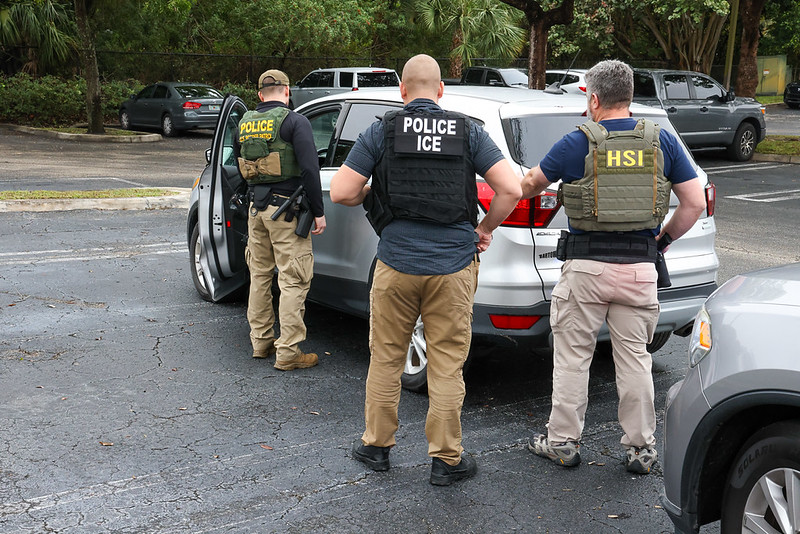
Florida leads the nation in immigration arrests. | Photo courtesy of ICE.
ICE to expand footprint in Southwest Florida, seeking local coworking spaces
Employees using co-working spaces around Southwest Florida could soon get new officemates: U.S. Immigration and Customs Enforcement personnel.
As ICE expands operations throughout the country, the agency is seeking flexible working space for its employees in 11 Florida cities, including Sarasota and Bradenton.
The push comes as Florida leads the nation in ICE apprehensions, and local law enforcement cash in on state funding for immigration enforcement – with the Sarasota County Sheriff’s Office bringing in more than $1.1 million from Florida’s State Board of Immigration Enforcement in February.
The federal agency has identified more cities in Florida than any other state where it is seeking office space, followed by Arizona and California, according to documents posted to a government procurement website.
The focus on Florida reflects how the state has furthered President Donald Trump’s deportation agenda through local cooperation – without high-profile sweeps like those in Minneapolis, Los Angeles, Chicago and other prominent blue cities.
The national push would see roughly 300 federal employees placed in flexible office spaces across 90 cities. In a statement, an ICE spokesperson wrote that the agency has increased its national presence by 12,000 “officers and agents on the ground,” but declined to answer questions about its work in Sarasota and Bradenton.
Never miss a story: Sign up for the Suncoast Searchlight newsletter
ICE apprehensions expand statewide
Across Florida, ICE apprehensions increased dramatically last year – with roughly 20,000 arrests reported between Trump’s Jan. 20 inauguration and Oct. 15, 2025 compared to about 5,400 for the same time frame during the year prior, according to data obtained from the Deportation Data Project. About a quarter of those arrested in Florida by ICE in 2025 had only immigration violations and no criminal charges or convictions. More than two-thirds had no convictions.
The uptick in immigration enforcement reflects how Florida has sought to match the federal government’s efforts to arrest and deport undocumented immigrants.
Using emergency funding, the state created its own immigration jail in the Everglades, dubbed Alligator Alcatraz – spending more than $1 million a day on the facility, according to documents first reported by the Florida Trib. Amid public controversy over the jail, which has so far cost the state more than $570 million, state officials suggested the federal government would help cover the bill. But so far, that funding remains elusive.
In February 2025, the state created its own hub – the State Board of Immigration Enforcement – to coordinate immigration enforcement in Florida, offering $250 million to local police and sheriff’s offices taking on the work.
Law enforcement agencies in Florida have offered unprecedented cooperation with ICE. Every sheriff’s office and more than 150 police departments in the state have signed agreements allowing them to apprehend people on non-criminal immigration violations. Agencies have used routine traffic stops to help fuel deportations in Florida.
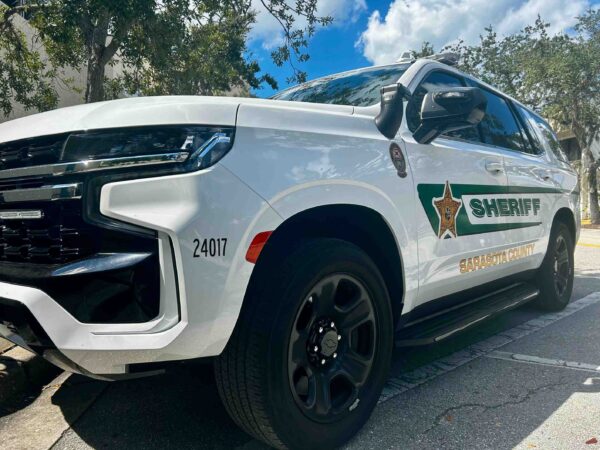
The Sarasota County Sheriff’s Office has emerged as one of the Suncoast’s most active partners with U.S. Immigration and Customs Enforcement. | Photo by Alice Herman, Suncoast Searchlight
In the Suncoast, the Sarasota County Sheriff’s Office has taken a leading role in immigration enforcement, sending officers to patrol Alligator Alcatraz, shuttling detained immigrants between facilities and earning more than $280,000 in October from the State Board of Immigration Enforcement.
In February, the Sarasota County Sheriff’s Office received another $1.1 million from the state – with more than $900,000 earmarked for the purchase of data collection and analysis software. The Manatee County Sheriff’s Office has not sought or received funding under the program, according to State Board of Immigration Enforcement records and the sheriff’s office.
Representatives of the Sarasota County Sheriff’s Office and Manatee County Sheriff’s Office said their departments were unaware of ICE’s plans to rent out co-working space in the region.
The federal agency’s renewed push for flexible office space comes after an initial effort to expand its footprint in Southwest Florida. In September, ICE put out a request to lease larger blocks of office space in Tampa and Fort Myers.
But the agency has concealed its local contracts. According to a report by WIRED, ICE began leasing offices across the country without disclosing their locations. Some of those offices are located near sensitive spaces like schools, churches and medical facilities, according to the WIRED report.
When Suncoast Searchlight requested information about the nature of the agency’s plans to lease co-working spaces locally, an ICE spokesperson said the agency would “not confirm office locations as our officers are facing a coordinated campaign of violence against them.”
Community, law enforcement pushback
As Florida law enforcement agencies ramp up immigration-related arrests, the human rights group Amnesty International has alleged that people held at Alligator Alcatraz have been subject to torture, and individuals in the Krome detention facility in Miami have reported medical neglect, overcrowding and hunger.
Local immigrant rights groups and churches have sought to provide aid for families experiencing deportations.
“I’ve seen families struggling to keep their bills paid,” said Ermelinda Velasquez, a Bradenton organizer with the mutual aid and immigrant advocacy group El Pueblo Unido Tampa Bay. According to ICE arrest data reviewed by Suncoast Searchlight, nearly 90% of ICE arrests in Florida last year targeted men – leaving some families in economic distress.
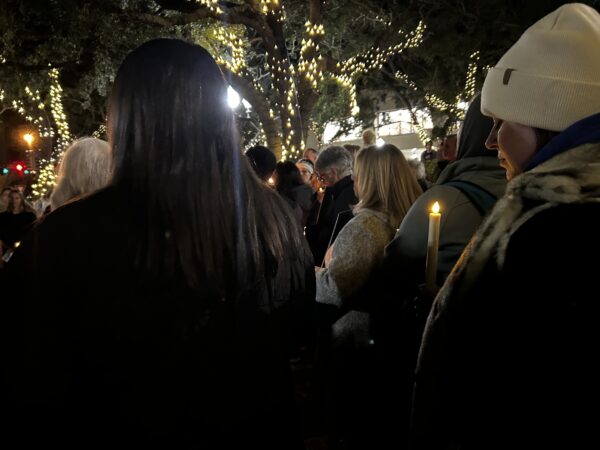
Sarasota community members gathered at a prayer vigil for Alex Pretti, a Minneapolis man who was shot and killed by Customs and Border Patrol agents in January. | Photo by Alice Herman, Suncoast Searchlight
“Moms have become homeless, or have to move in with family members,” said Velasquez. “[We’re] helping provide food, making sure their children eat.”
The large-scale effort to arrest and detain undocumented immigrants has even led some of the most conservative Florida law enforcement leaders to call for reform.
During a March 16 meeting of the State Immigration Enforcement Council, Chairman Grady Judd, the Polk County sheriff, said he had heard from local “hardcore conservative Republican(s)” concerned that “there are those in the country that have been here for a very long time, that … under this particular set of circumstances are being swept up and taken out of the country.”
He related a story about an undocumented woman in her 20s who immigrated to the United States from Colombia as a child and was deported while seeking legal status in the country.
“She was scooped up out of the waiting room at ICE for deportation,” said Judd, who called for a new pathway to legal status for undocumented immigrants without criminal backgrounds. “It was like, ‘Well, where in Colombia do I go? I don’t have any relatives, I don’t know anybody in Colombia. But you’re gonna put me on a plane and send me back to a country that I left as a child?’”
Alice Herman is an investigative/ watchdog reporter at Suncoast Searchlight. Email Alice at alice@suncoastsearchlight.org