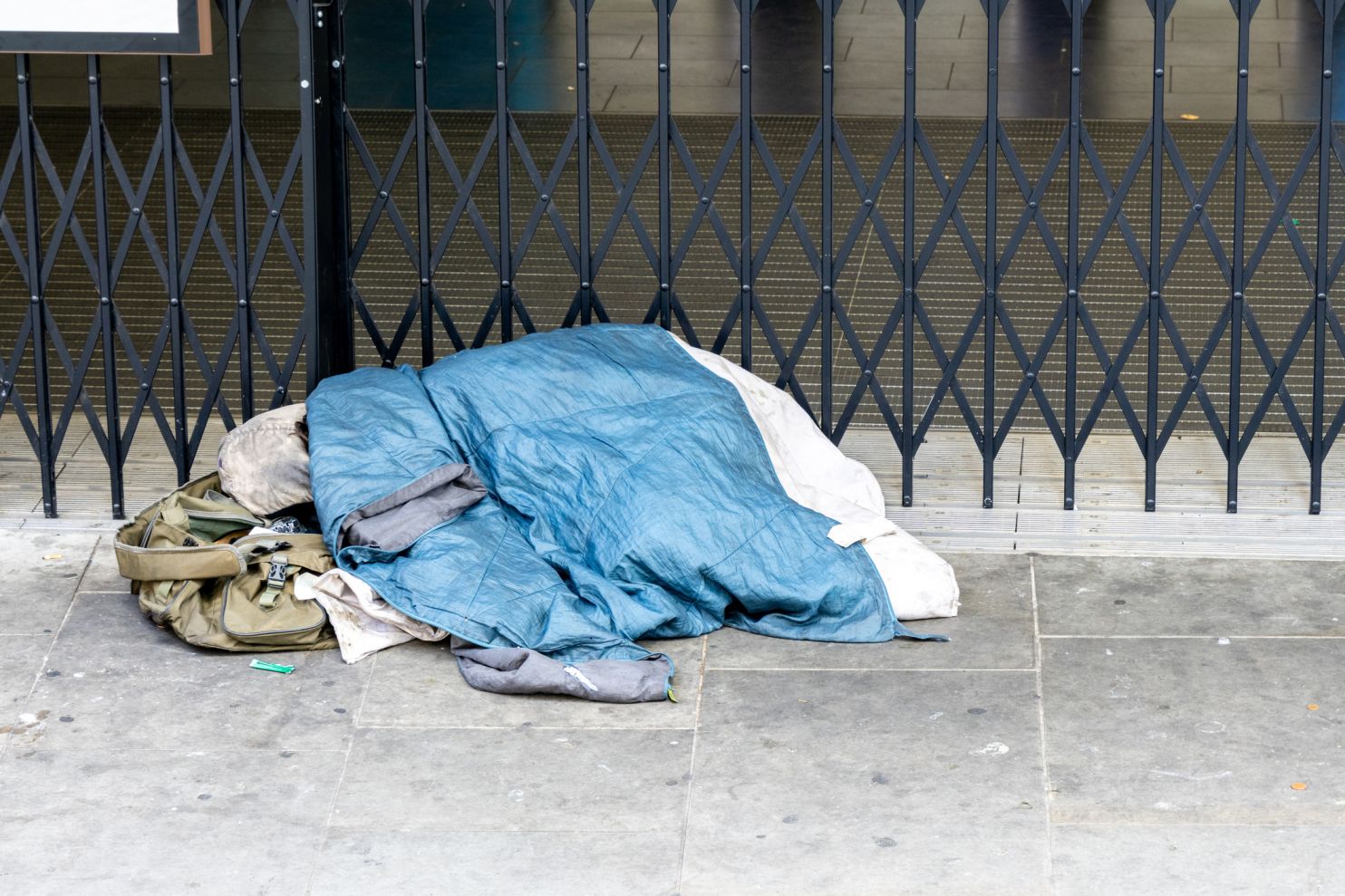
Across Sarasota and Manatee counties, they found 931 people experiencing homelessness this year, down almost 20% from 2023, when there were 1,150. | Photo by NORRIE3699 via iStock
Sarasota and Manatee see surge in population facing risk of homelessness
The number of people on the precipice of homelessness across Sarasota and Manatee counties has risen by more than half during the past three years, driven by higher costs of living, according to data gathered by local homelessness organizations.
The overall homeless population has declined, but the organizations that serve homeless individuals counted more than 5,000 people this year who are at risk of losing their place to stay, up from just under 3,000 in 2023.
Jalynn Booker, the director of data systems for Suncoast Partnership to End Homelessness, presented homelessness data from Manatee and Sarasota counties in a meeting Wednesday, Aug. 19. | Emily Andersen, Suncoast Searchlight
The rise in these numbers indicate that more people are seeking support to avoid living on the streets as they feel the pinch of a local economy struggling to rebound from inflation, the COVID-19 pandemic and recent hurricanes.
“There’s just more people that are teetering on that line now,” said Jalynn Booker, the director of data systems for Suncoast Partnership to End Homelessness.
Each January, volunteers canvas the streets, cataloging how many people are living outside or in homeless shelters, in what’s called a point-in-time, or PIT, count.
Across Sarasota and Manatee counties, they found 931 people experiencing homelessness this year, down almost 20% from 2023, when there were 1,150. Most of them were counted in Manatee County, even though it has a smaller overall population than Sarasota.
The Suncoast Partnership to End Homelessness presented the annual data to continuum of care representatives during a meeting last week in the New College of Florida Selby Auditorium.
Booker attributed the decrease in people who are literally homeless — meaning they spend their nights either in a shelter or somewhere that is not meant for human habitation — to the work being done by local homelessness organizations.
Suncoast Partnership also gathers data through a Community Services Information System, through which providers catalogue each person participating in their programs. That data includes more people than the PIT count. In all, more than 3,200 people sought services who are homeless this year — down from 4,675 in 2023.
That was also the data set that showed the increase in people who are at risk of homelessness, which can include those who may already consider themselves homeless because they don’t have a stable place to stay, like someone who couch surfs or stays in a hotel for long periods of time.
“It’s so common that we see people basically living check to check,” Suncoast Partnership CEO Taylor Neighbors said. “We know that we have a far greater number that are at risk that we don’t capture in the point-in-time count.”
Taylor Neighbors, the CEO of Suncoast Partnership to End Homelessness, spoke to representatives from organizations across Manatee and Sarasota counties that work to combat homelessness on Wednesday, Aug. 19. | Emily Andersen, Suncoast Searchlight.
The line between being at-risk and homeless is an easy one to cross.
Marysa Jackson is a certified nursing assistant who has lived in Sarasota her whole life. She has gone back and forth between at-risk and homeless multiple times since 2023, when she got pregnant and the child’s father left her.

Marysa Jackson is a certified nursing assistant who has lived in Sarasota her whole life and has been in and out of homelessness since 2023. | Photo courtesy of Marysa Jackson
She stayed with friends and family while her son, Arris, was a newborn, and later moved between different shelters and transitional housing programs.
Earlier this year, a Salvation Army program helped get her connected to a low-income housing complex where she stayed for 90 days, before getting evicted after missing a rent payment because her bank account had been hacked.
“I was just scrambling around, trying to figure out what I’m going to do and how this could happen,” she said.
Jackson and her son are now staying in an emergency shelter operated by Harvest House, and she’s working with a case manager to find a permanent place to live
“If you’re going to be in a shelter like this, you have to put in the work,” Jackson said. “You have to want better for yourself and your family.”
Florida’s economy has been stretched thin over the past few years, with tourism and new development both struggling to recover from the COVID-19 pandemic and recent hurricanes.
The strain has been exacerbated by federal and state policies reducing access to programs like food stamps and Medicaid, leading more people to turn to nonprofit programs, said Holly Bullard, the chief strategy and development officer for the Florida Policy Institute.
She said that could account for the rise in people at risk of becoming homeless.
Those difficulties have been especially dire in the Sarasota and Manatee area, where much of the population is of retirement age and the economy is heavily dependent on the service sector.
“Florida’s economy is always the canary in the coal mine … Sarasota is even more so. It’s a signal for all of Florida,” Bullard said. “You have all of these things coming to a head in Sarasota.”
Bullard said she is also concerned the property tax amendment that will appear on Florida’s November ballot could worsen the economic situation for people who rely on support programs — many of which are funded through local government grants that could be cut if property tax revenue evaporates.
“If anyone is concerned now,” she said, “they should be very concerned about the impacts of Amendment Three.”
Emily Andersen is a watchdog/investigative reporter for Suncoast Searchlight. Email her at eandersen@suncoastsearchlight.org.