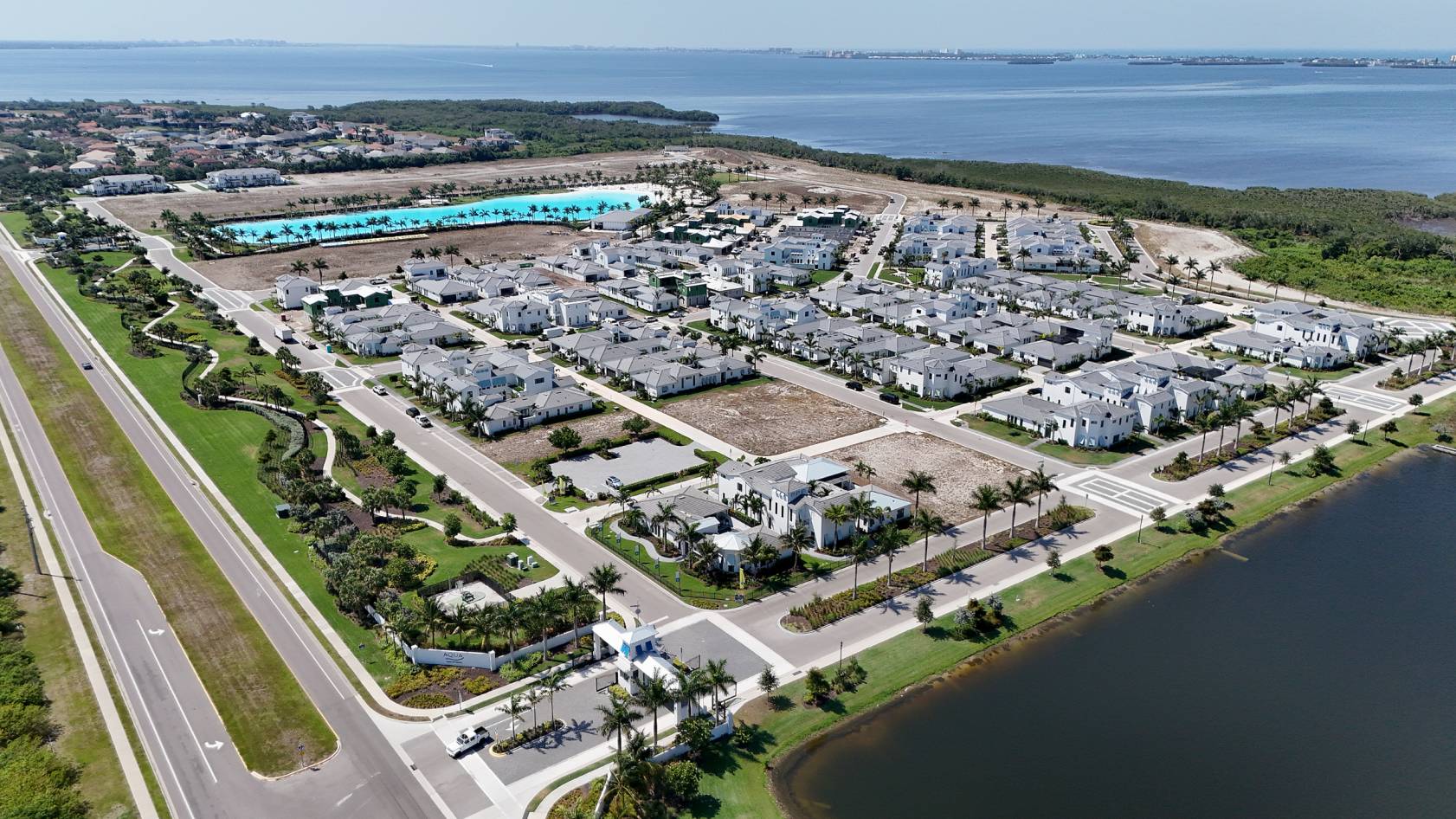
Views of the developments along El Conquistador Parkway on Sarasota Bay called Aqua and Cirrus. Manatee and Sarasota counties have seen rapid development in the last decade. | Photo by Bradenton Herald staff
Window closing to roll back Florida SB 180 home rule limits
The Florida Legislature has just days in the current session to kill controversial provisions in a state law limiting local jurisdictions from regulating growth.
Senate Bill 180, which passed with nearly unanimous approval last year, limits cities and counties from advancing any measures deemed more “burdensome or restrictive” on development in the wake of major storms. The law spurred backlash from local governments that had spent months — in some cases years — crafting planning policies, only to see them struck down by the state.
“When a local government doesn’t have the ability to respond to things like hurricanes in a meaningful way, we just continue to make the same mistakes,” said Kim Dinkins, the Policy and Planning Director of 1000 Friends of Florida, an advocacy organization focusing on growth management and conservation that has sought to reverse parts of SB 180.
In Manatee County, where voters elected a slate of commissioners in 2024 who ran on a platform of curbing sprawl, SB 180 had immediate impacts. When commissioners advanced measures to restore wetlands protections and raise impact fees on developers, the Florida Department of Commerce threatened litigation.
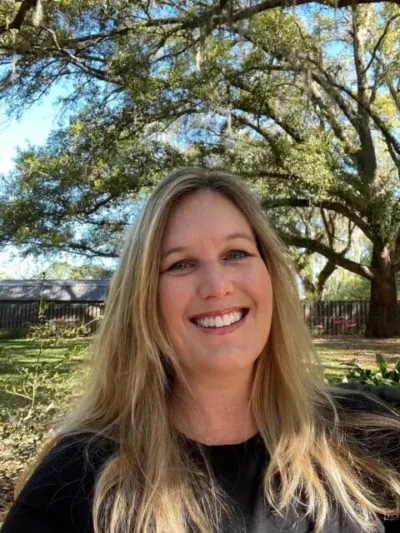
Kim Dinkins is the Policy and Planning director of 1000 Friends of Florida. | Photo courtesy of 1000 Friends of Florida
Citing fears that Gov. Ron DeSantis would remove them from office, commissioners backed off. A similar fight played out in Orange County, which joined a lawsuit alongside Manatee, Fort Lauderdale, Naples and other local jurisdictions challenging the law. The issue has spurred blowback across civil society groups, including environmental and conservation-focused organizations, good government groups and libertarian activists.
Now, the state Senate has passed a bill largely reversing that preemption on local planning. But the Florida House of Representatives has not moved on a companion bill — with the end of the legislative session looming. If they do not advance a bill, the Senate’s measure, which narrows the geographic scope of SB 180 and would end its post-storm preemptions in June 2026, will die.
Dinkins spoke with Suncoast Searchlight this week about the group’s efforts to overturn aspects of SB 180 and how the law has impacted local governments.
Suncoast Searchlight:
Can you tell me why 1000 Friends got involved with the fight over SB 180 and what that has looked like in the past year?
Kim Dinkins:
Senate Bill 180 was an emergencies bill that had those two sections that really chilled the ability for local governments to do any meaningful planning on the heels of three very severe hurricanes — and then moving forward, in any future storm, prohibiting them from doing any sort of planning within 100 miles of a storm for a full year. The tenets of what we work on are community planning, land conservation and water quality issues … It didn’t make sense to us that we were learning all of these lessons from these storms but then not being able to implement any of those lessons in our community planning.
Suncoast Searchlight:
What are some of the lessons that you see towns and counties learning from storms and how has SB 180 has hampered them?
Kim Dinkins:
I think probably the most high-profile, or the things most directly impacted, are areas where flooding occurs, so where storms come through and citizens are flooding or having stormwater issues. A lot of times that’s because those are historic neighborhoods that don’t have the stormwater infrastructure. As we learn more about how how important it is to be able to provide adequate storage for storms, and as we get more intense and frequent storms that result in more rain, as well as dealing with all of the water quality impacts from our increased population and trying to address water quality issues, we have learned new best management practices and higher summer standards that could be implemented at the state, at the county level or at the local level.
Suncoast Searchlight:
1000 friends and other local jurisdictions have gotten involved with a lawsuit over SB 180. Can you tell me about that?
Kim Dinkins:
There were two lawsuits — the lawsuit [brought by local jurisdictions] is separate from the 1000 Friends of Florida lawsuit, and the one that we’re in is with an individual citizen who was impacted by the inability of her community to implement a rural boundary, which was a voter referendum in Orange County.
Suncoast Searchlight:
What did that mean for her?
Kim Dinkins:
It was the inability of the local government to set a higher standard for development in what they call in Orange County “rural settlements.” So she had moved to this rural settlement that was a development outside of a major urban area and, without that rural boundary, the sprawl was kind of continuing on. And so she was concerned about development proposals in the area that had been denied previously, but then would be able to be fast-tracked without those protections under SB 180.
Suncoast Searchlight:
If SB 180 stays on the books, are there other means for local jurisdictions to regulate growth?
Kim Dinkins:
Section 28 [of SB 180] looks back to August 2024 and forward through October 2027, so any new policies can be implemented after that, as long as there’s not another storm in those areas. So basically, the local governments are stuck with what’s on the books today until 2027, and then the next time a storm comes in, they have to wait a full year to respond.
Suncoast Searchlight:
So they basically have to cross their fingers that there’s not another major storm.
Kim Dinkins:
Right, and take that maybe potentially small window and pass all of their regular new standards during that time.
Local governments have spent millions of dollars to update their comprehensive plans and held public hearings and all of those things. And in some cases, they had already sent their amended amendments or requests to the Department of Commerce. And then the Department of Commerce said, ‘Yeah, this all looks good.’ But then when they came back after adoption, they said it was null and void because it had a couple of provisions that were more restrictive or burdensome. When you’re not able to respond to the will of the people, it just puts local governments in a difficult position.
Suncoast Searchlight:
Is there anything that you feel like the public should understand about SB 180 that they might not already?
Kim Dinkins:
I would like to just throw out there that this is a pause in community planning, it’s not the end of it. So, continuing to work on those plans to make your community better, to be more resilient, to address local concerns, is still a worthwhile process. Because even though the legislature has put a pause on it, it’s still our best and only way to plan our communities into the future.
Alice Herman is an investigative watchdog reporter at Suncoast Searchlight. Email Alice at alice@suncoastsearchlight.org.
Never miss a story: Sign up for the Suncoast Searchlight newsletter