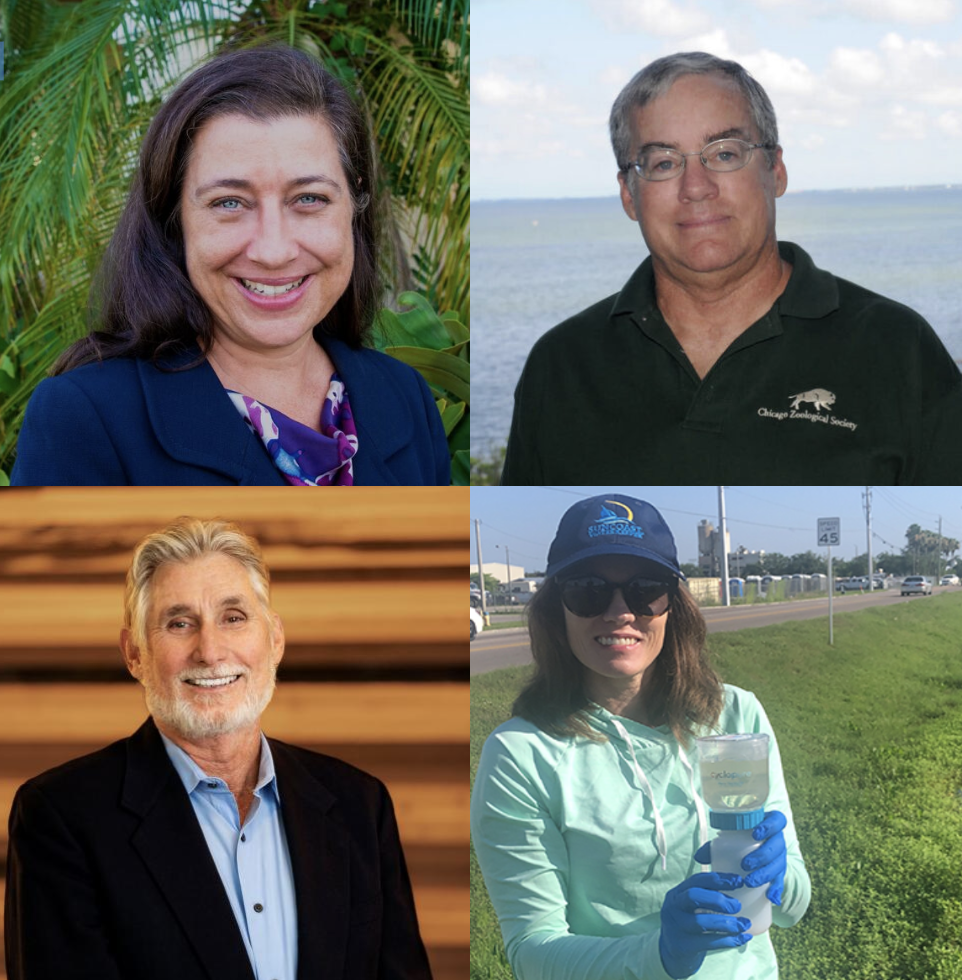
Local environmental advocates will lead a panel discussion moderated by Suncoast Searchlight on April 15 at The Bay Park. | Photo compilation by Suncoast Searchlight
Scientists to discuss Suncoast environmental threats at free Sarasota panel
One researches dolphin pods in Sarasota Bay.
Another studies the impacts of pollution in area waterways.
A third leads a consortium that strives to bring awareness to the work of local scientists.
Those experts, along with another local environmental advocate, will lead a panel discussion moderated by Suncoast Searchlight on April 15 at The Bay Park.
The conversation will offer a rare chance to hear directly from the scientists and advocates studying the region’s most pressing environmental challenges, from microplastics in local waters to the loss of natural habitats, and what those changes mean for the future of the Suncoast.
The free event — dubbed “Beneath the Surface: The Environmental Stories Shaping our Community” — starts at 3 p.m. inside the Bayfront Community Center behind the Municipal Auditorium. Presented in partnership with the Science and Environment Council, it is part of Suncoast Searchlight’s ongoing community engagement series supported by the Gulf Coast Community Foundation.
The panel coincides with the Giving Challenging, a biennial, 24-hour fundraising event supporting local nonprofits, including Suncoast Searchlight. This year, organizers will host nearly a dozen pop-up stations throughout the community, including one from 4:30-6:30 p.m. at The Bay, where people can learn more about the organizations.
Organizers said the goal is to pair information with action, giving residents a clearer understanding of the environmental challenges facing the Suncoast and an immediate opportunity to support the organizations working on them.
“There’s a lot of important environmental research and work happening in this region that doesn’t get a lot of public attention,” said Emily Le Coz, executive editor-in-chief of Suncoast Searchlight. “That’s why we’re proud to partner with the Science and Environment Council on this and other initiatives designed to promote the organizations involved in the work.”
Panelists for the environmental discussion include Randy Wells, director of the Dolphin Research Program; Abbey Tryna, executive director of Suncoast Waterkeeper; Jennifer Shafer, co-executive director Science and Environmental Council; and Jon Thaxton, director of policy and advocacy at the Gulf Coast Community Foundation.
Randy Wells – director of the Dolphin Research Program
Randy Wells, director of the Sarasota Dolphin Research Program | Photo courtesy of Sarasota Dolphin Research Program
Wells has spent 56 years conducting dolphin research in Sarasota Bay, helping shape protections for bottlenose dolphins throughout the southeastern United States.
Since The Sarasota Dolphin Research Program was founded, the organization has identified a year-round population of 170 dolphins in the bay — a group that offers insight into the health of the local ecosystem.
The research has revealed troubling signs, like the discovery of microplastics in dolphins at concentrations sometimes higher than those found in humans. Microplastics are tiny particles of plastic that degrade from larger plastic products and can carry harmful chemicals into living organisms.
“They breathe the same air, eat the same fish and swim in the same waters,” Wells said. “They are impacted by the same factors that can impact us.”
Studying where plastic contamination is originating could help understand how to combat the problem, he said.
“Where we find them is at the mouth of Phillippi Creek. That begins to point the finger at humans and wastewater discharges.”
Abbey Tryna – executive director of Suncoast Waterkeeper
Abbey Tryna, executive director of the Suncoast Waterkeeper | Photo courtesy of Suncoast Waterkeeper
Much of Suncoast Waterkeeper’s work, Tyrna said, focuses on helping the public understand emerging challenges facing one of the region’s most important natural resources — water.
But Tyrna said she’s often surprised by how little the public understands about the resource that drew many of them to the Suncoast.
“People love the beach, the bay and the water,” she said. “They love going out there, but they don’t stop and think about what’s keeping it in its condition and how tenuous that system is.”
The region is under phase three water restrictions that limit the times and days that people can irrigate their lawns, yet Tyrna continues to see people with sprinklers turned on when they shouldn’t and homeowners pressure washing their driveways and fences. Water resources are so low that restaurants are restricted from providing tap water to patrons until they ask for it.
“Do they know what that means, how much water we have, when phase three water restrictions are in place?” Tryna asked.
Jennifer Shafer – co-executive director Science and Environmental Council
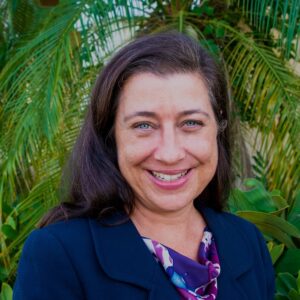
Jennifer Shafer, co-executive director of the Science and Environmental Council | Photo courtesy of Jennifer Shafer
Shafer spends her time trying to increase environmental understanding through public discussion and collaboration with more than 40 leading science-based nonprofit and governmental organizations.
The Science and Environmental Council partnered with Suncoast Searchlight for the panel discussion to increase the public’s awareness of pressing environmental topics in the community.
It’s not just one topic about the environment that deserves more attention, she said, but a general public understanding about the interaction of the environment and how those systems work. The Science and Environmental Council recently launched EcoBeat — a resource for reporters to connect with local scientists and environmentalists about topics that impact the region.
“We have to think of our ecosystem as a utility and maintain it accordingly,” Shafer said.
Jon Thaxton – director of policy and advocacy at the Gulf Coast Community Foundation.
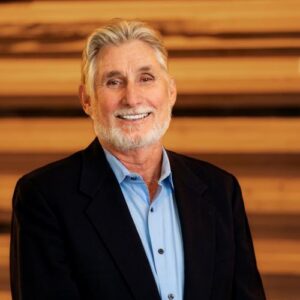
Jon Thaxton, director of policy and advocacy for the Gulf Coast Community Foundation | Photo courtesy of Gulf Coast Community Foundation
Thaxton has been an environmentalist since he was in high school. Years later, he often clashed with real estate interests during his time as a Sarasota County commissioner from 2000 to 2012. He said he worries that the current generation will be the last to experience native Florida ecosystems as more and more projects continue to be developed.
He said one topic that deserves more attention is the loss of natural habitat in the region’s pine flatlands, which has largely been developed into residential housing communities.
“We give no consideration to the wildlife that is endemic to those environments,” he said.
It isn’t just native species that suffer as their habitats get bulldozed for housing, but also impacts natural processes that manage stormwater and currently prevents flooding.
“Pine flatlands hold water,” he said, “and purify it. That protects property from flooding.”
Derek Gilliam is a watchdog/investigative reporter for Suncoast Searchlight. Email Derek at derek@suncoastsearchlight.org.