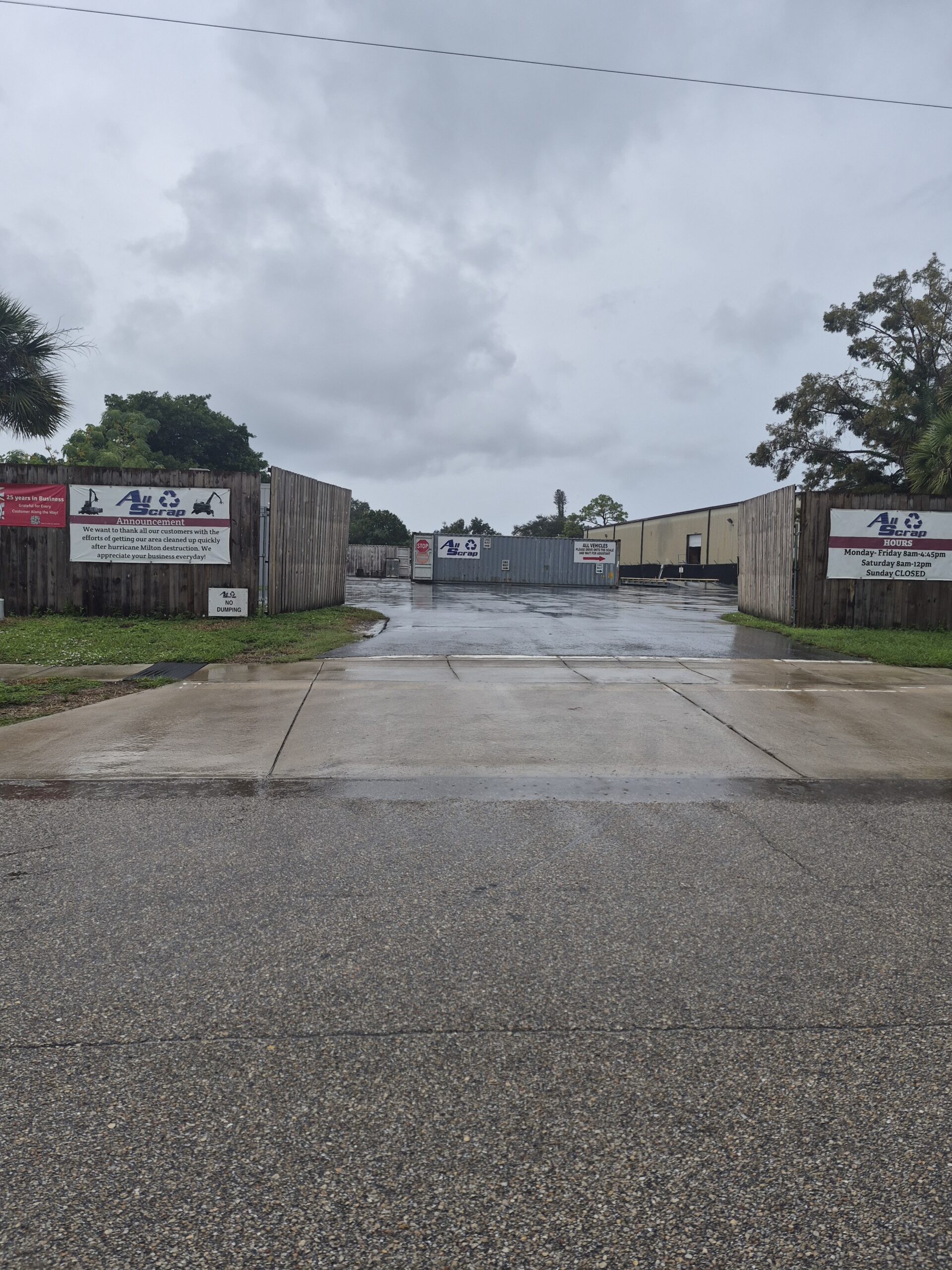
Stormwater leaves the facility of All Scrap Nokomis. Suncoast Waterkeeper has filed a formal intent to sue the business over alleged violations of the Clean Water Act. | Photo courtesy of Suncoast Waterkeeper
Nokomis scrapyard faces lawsuit threat over polluted runoff
A team of environmental advocates have filed a formal intent to sue a local metal scrapyard for allegations of polluting nearby waterways if the business doesn’t address stormwater contamination at its facility.
Responding to a myriad of complaints from residents over polluted discharge at All Scrap Nokomis, Suncoast Waterkeeper launched a water quality investigation in July that found iron concentrations more than 10 times the federal benchmark, as well as elevated concentrations of other pollutants.
The stormwater leaving the facility filters into Dona Bay and Roberts Bay, said Abbey Tyrna, executive director of Suncoast Waterkeeper.
Scrapyards like All Scrap Nokomis are bound by federal and state permitting that require a stormwater pollution prevention plan to maintain discharge from heavy metals. Not having a plan, Tyrna said, allows stormwater to leave the facility with high pollution levels and harm Sarasota’s ecosystems.

“If everybody who gets a permit to pollute doesn’t abide by their permits, then we would have a much different Suncoast,” Tyrna said.
All Scrap Nokomis did not respond to two phone calls and two emails from Suncoast Searchlight seeking comment.
Under the Clean Water Act –– a federal law that regulates water pollution –– Suncoast Waterkeeper has to wait 60 days from its Notice of Intent to Sue, issued on Oct. 21, before it can take official legal action.
Tyrna said All Scrap hasn’t responded to the notice. If the company responds and corrects the issue within 60 days, she said they’ll test the water leaving the facility again to verify containment levels are within the legal limits.
This isn’t the first time All Scrap Nokomis has been at the center of a legal dispute regarding its business practices.
Two years ago, Sarasota County warned All Scrap that it violated metal stockpiling and land use regulations. When the county denied All Scrap Nokomis’ business use permit last year, the company contested the decision –– a challenge that continues to play out in courts.
“It doesn’t matter if you’re a small business or a big business –– water quality is everybody’s business,” Tyrna said. “They must operate responsibly and protect the waters we all depend on.”
Scrapyard runoff raises environmental concerns
All Scrap drew significant community pushback following the 2024 hurricane season, when storm debris and scrap metal were stockpiled outdoors near the Legacy Trail. Residents raised concerns about the facility’s operations, including heavy truck traffic, improper debris storage, and stormwater runoff entering a drainage ditch that leads to Dona Bay.
When rainwater falls on scrap metal or other industrial equipment, it can pick up contaminants and carry them off the property, eventually leading to main waterways.
Contamination can also come from dumped or stored materials, such as leaking vehicle parts. The EPA recommends storing equipment prone to spills and leakage indoors or under a roof, to limit exposure to stormwater.
Florida enforces the federal rules tied to the Clean Water Act through a permitting program that allows certain facilities to discharge some pollutants as long as they comply with the law’s regulations.
While facilities are subject to on-site evaluations, the permitting process is predominantly self-reporting, meaning the facilities themselves are the ones who report their compliance.

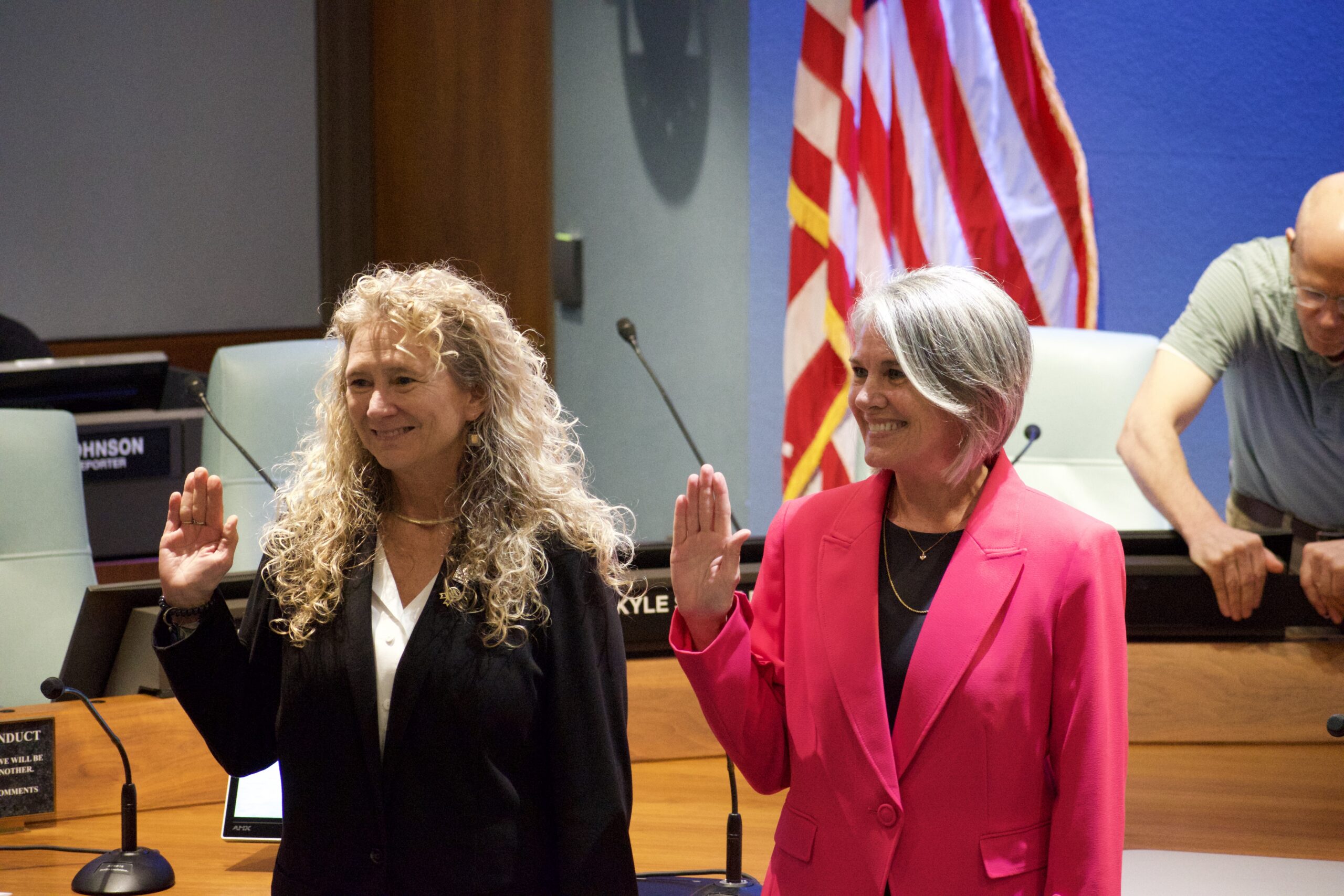
Abbey Tyrna, executive director of Suncoast Waterkeeper, said the stormwater leaving the facility filters into Dona Bay and Roberts Bay. | Photo by C. Todd Sherman for Suncoast Searchlight
“That’s why it’s important for Suncoast Waterkeeper to follow up when somebody reports something,” Tyrna said, “to make sure they’re doing their job of protecting the environment.”
She said the samples collected from All Scrap Nokomis indicate it has not taken the necessary precautions to abide by its permit.
A July sample collected by Suncoast Waterkeeper contained 10.7 milligrams of iron per liter of stormwater runoff. That’s more than 10 times the industrial stormwater benchmark. The waterkeeper also detected 0.9 milligrams per liter of zinc, above the 0.117 benchmark.
These benchmarks, established in 1995, are regulated by state permits for stormwater discharge.
By discharging these contaminants, Tyrna said local environments are put at risk.
Pollutants from heavy metals can harm all kinds of aquatic life as they discharge into waterways.
She said they can even contaminate plants and macroinvertebrates, which include crayfish, mollusks and aquatic insects. Since birds and other surrounding wildlife feed on macroinvertebrates, that contamination spreads to whichever animal consumes it.
“It’s contaminating the food web,” Tyrna said. “It’s a problem not just as it’s being discharged, but it’ll be a problem for a while.”
Scrapyards, when regulated properly, are an integral component of environmental conservation by recycling metals and keeping toxic waste out of landfills..
Environmental advocates say holding permitted facilities accountable ensures they continue to operate in ways that benefit their surrounding environments and communities.
“Suncoast Waterkeeper’s enforcement of the federal Clean Water Act aims to ensure that the industrial activities at the site will conform to best management practices and that pollutants in their stormwater discharges are reduced,” environmental lawyer and Suncoast Waterkeeper founder Justin Bloom said in a statement. “The facility must comply with the Clean Water Act, which provides us the right to enforce its provisions.”
Clinton Engelberger is a contributing writer and fact checker for Suncoast Searchlight and has freelanced for The Times Union, OutSFL and The Washington Blade. Email Clinton at clintonengelberger@gmail.com.