
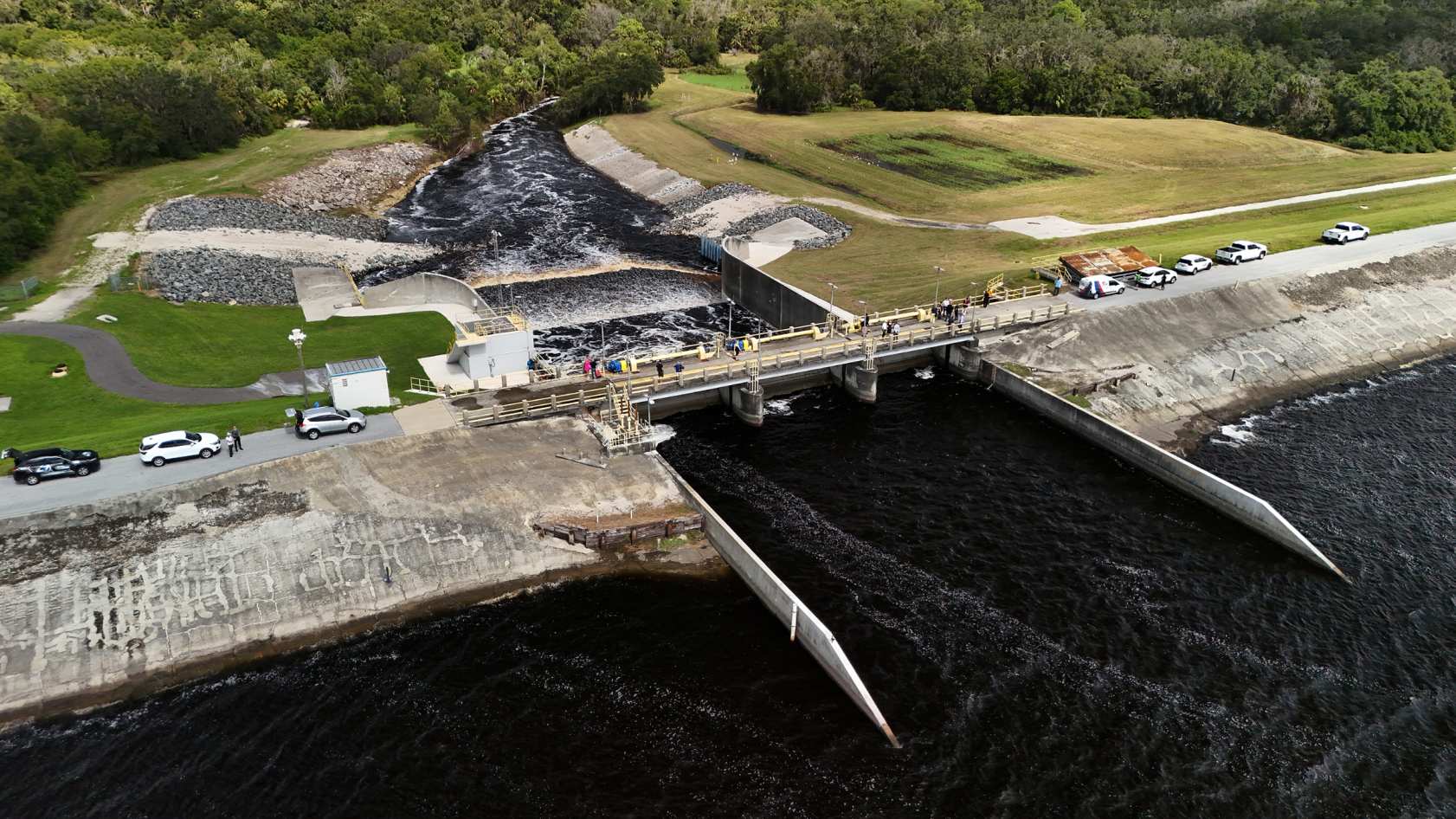
Manatee County draws about two-thirds of its water from Lake Manatee, shown here. Photo by Tiffany Tompkins, Bradenton Herald
As development threatens Manatee’s water supply, voters weigh conservation
Manatee County’s growing population is putting pressure on its drinking water supply — and as development consumes more open space, environmentalists warn that the land protecting those water sources is disappearing too.
Now, Manatee County voters will decide whether to expand an existing land conservation program that supporters say helps safeguard those water resources from pollution and runoff.
The November referendum would increase the property tax to acquire and preserve environmentally sensitive land and authorize up to $75 million in bonds to do even more of it. The taxes collected will pay off the bonds over time as county officials use the money for the program.
If approved, the measure would cost the median Manatee County homesteaded property owner about $34 per year, according to the campaign website.
The referendum comes at a critical time.
Manatee County has added nearly 70,000 since 2020 — a population growth of 17% — almost twice as fast as Florida overall, according to U.S. Census Bureau estimates. It’s projected to grow another 17% by 2040, surpassing a half-million residents, according to a study presented to commissioners in January.
Across Manatee County, sprawling development continues to take over rural lands, inching closer to the county’s Future Development Area Boundary, a line intended to limit sprawl and preserve agriculture.
“We’re seeing the impacts of growth,” county Utilities Director Patrick Shea told commissioners during a meeting in January. “Water use is increasing as our population increases.”
While the land acquisition program won’t necessarily expand the county’s available water sources, environmentalists say it will go a long way to protect the water the county does have, particularly by preventing runoff and pollution from development.
“There is really nothing more important to our communities than having water to drink,” said Mason Gravley, chair of the county’s Environmental Lands Management and Acquisition Advisory Committee, which advises the commissioners on what lands are best to preserve through the program.
“One of, if not the best way to do that,” Gravley said, “is protecting the land in which the water falls on and is influenced by.”
Proposed referendum could supply funding to preserve lands
Manatee County voters overwhelmingly approved the original land conservation program in 2020 with more than 70% support. It allowed for $50 million in bonds to purchase and preserve environmentally sensitive property.
Since then, the county has used the program to acquire more than 300 acres, including land that expanded Emerson Point Preserve in 2024. The county also has partnered with the state to protect agricultural land through conservation easements.
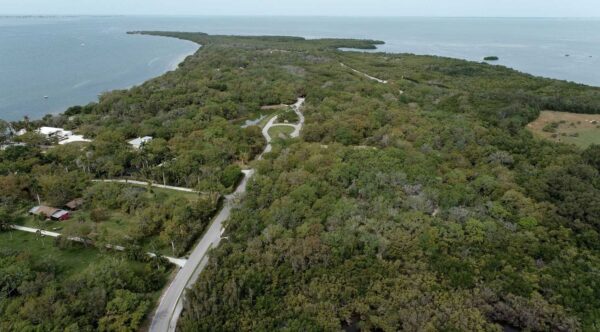
In 2024, Manatee County commissioners approved the purchase of 98 acres of land to expand Emerson Point Preserve in Palmetto. | Photo by Tiffany Tompkins, Bradenton Herald
But much of the original $50 million has been spent or committed, according to Merrie Lynn Parker, a campaign member for “Protect Water, Preserve Land.”
Supporters say more funding is needed to keep pace with development. What’s different about this round of bonds is that it will allow the Environmental Lands Management and Acquisition Advisory Committee to recommend preservation through easements.
Previously, the program focused on fee-simple acquisition, meaning there is an expectation that the land will be used for public access at some point, like Emerson Point Preserve.
“I don’t need to be able to walk on every acre of land we protect,” Gravley said. “I can sleep better at night just knowing it’s protected. And I feel a lot of voters feel that way, too.”
With easements, the county will have the availability to purchase development rights in perpetuity. This would give landowners the ability to sell the rights for up to half of the value of the land, which then restricts the landowner from developing.
According to Gavely, this will give the county a new mechanism to give a competitive offer to landowners who may be put in a difficult spot of needing to sell the land for money but not wanting it to be developed.
“You’re not purchasing the land, you are only purchasing the development rights,”Gravley said.
Parker said the committee ensures residents’ tax dollars are spent appropriately.
“There’s quite a bit of protection to be sure it’s spent where it’s supposed to go,” Parker said.
Land preservation means preserving water quality, activists say
As rural lands face the danger of disappearing, especially in east Manatee County where subdivisions and commercial buildings continue to boom, supporters of the land acquisition program hope a second round of bonds will elevate conservation.
“I think people don’t realize how much land is out east and how vulnerable it is,” Gravley said. “There’s a huge opportunity.”
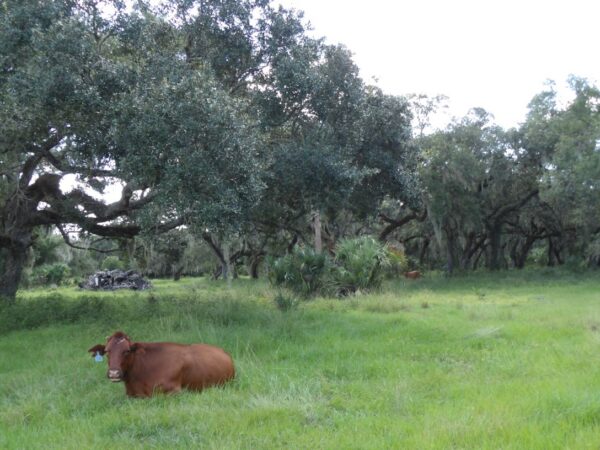
A cow sits in the grass in a rural area. Rapid development in east Manatee County has led to concerns over straining the water supply. | Emily Andersen, Suncoast Searchlight
Gravely and Parker both emphasized how protecting land around crucial water sources like the Manatee River and its tributaries will prevent additional runoff and pollution from entering the county’s water stream.
“With the overdevelopment, a lot of that water can no longer get where it used to go,” Parker said. “All that surface water eventually, in the past, would get into our drinking water flow…the more we can protect the properties around the waters, the better.”
Conserving land could also allow more rainwater to seep into the aquifer, preserving the natural water flows that give residents drinking water, Gravley said.
“A drop of rain that falls on a cow pasture has a much higher chance of making it to the aquifer or going where it needs to go versus if it falls on an asphalt parking lot,” Gravley said.
County looks to alternative ways to increase water supply
In January, Manatee commissioners heard an annual briefing from staff that the county might need to purchase water from Peace River sooner than expected.
During the briefing, Shea, the utilities director, said the county’s increased demands might mean drawing water from Peace River by 2036. Two-thirds of Manatee County’s water comes from Lake Manatee, according to the county.
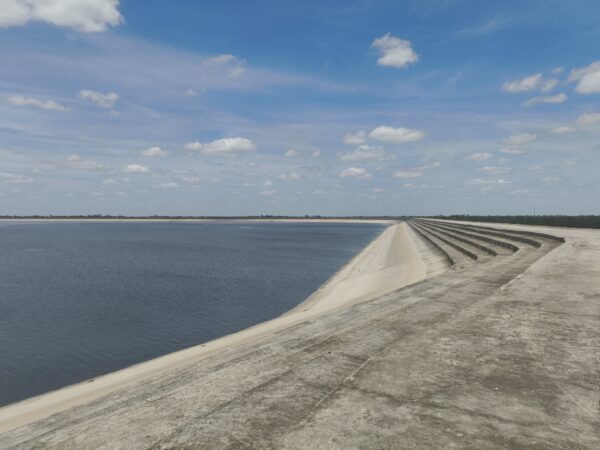
The Peace River Manasota Regional Water Supply Authority’s 6-billion gallon reservoir currently holds about 3 billion gallons of water. | Photo by Emily Andersen, Suncoast Searchlight
However, county officials now say there may be new possibilities to expand water sources that could delay the need to purchase water.
According to Casey Zempel, a spokesperson for Manatee County, future projects will improve the resiliency of the county’s supply from Duette Preserve, which includes the Manatee River headwaters and accounts for about a third of the county’s drinking water.
“In addition to providing a critical safeguard in the event of a disruption to the existing line, the project will also allow the County to increase its water supply capacity,” Zempel said in a statement.
He added that the county is working with the Southwest Florida Water Management District (SWFMD) to inquire about drawing more water from Duette.
“We are also exploring other opportunities to expand our water supply, although those efforts are still in the early stages of evaluation,” Zempel said.
This year, Manatee County and surrounding areas in the Suncoast have been experiencing a drier season than usual, causing SWFMD to declare an extreme water shortage. The district — which includes Manatee, Hillsborough, DeSoto and Sarasota counties, among others — experienced about 15 inches fewer of rainfall from September 2025 to August than the historic average.
The district also extended the one-day-per-week watering restrictions through March 2027.
Commissioner Tal Siddique said he believes the drought might be skewing the public’s perception of Manatee’s water supply.
“I think more people in the public need to understand we’re not running out of water,” Siddique said. “There is a concern long-term because we don’t know what the growth patterns will look like.”
The commission is expected to hear another annual report on the county’s water use early next year.
“Based on current projections, we anticipate recommending that the county defer connecting to the Peace River water supply system by several years, as we continue evaluating available capacity, projected demand and opportunities to maximize our existing water resources,” Zempel said.
Along with general improvements to the county’s advanced wastewater treatment facility, Siddique said there’s potential to look at other projects, like building another dam at Gilley Creek.
“I’m not concerned about running out of water at all,” Siddique said. “I just think we need to prepare for more capacity in the future. And that’s where it gets expensive. I think we’re going to be looking for incremental gains in the future, it’s not going to be as dramatic for water supply.”
Carter Weinhofer is a contributor to Suncoast Searchlight. Email him at weinhofercar@gmail.com.
Editor’s Note: This story was updated to correct the spelling of Mason Gravley’s last name.