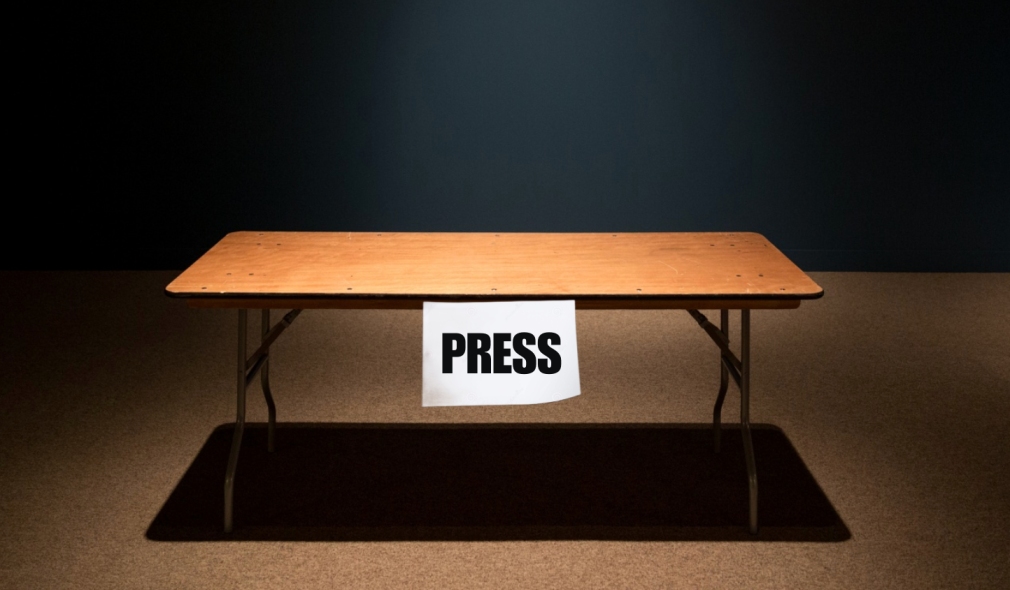
Newsrooms that for decades served as the eyes and ears of this community are being gutted to the point they cannot consistently cover the people and institutions in power. | Suncoast Searchlight photo illustration
The Suncoast is losing reporters. What happens when no one is watching?
COMMENTARY:
A year and a half ago, when Suncoast Searchlight published its first stories, I wrote a column explaining why we were here.
Local newsrooms had been shrinking for years, I wrote. The journalists who remained were doing their best with fewer resources, but stories were falling through the cracks, especially those that took the most time — investigations, explanatory journalism, the kind of reporting that examines how and why.
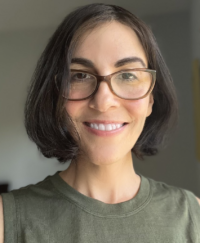
Emily Le Coz, Suncoast Searchlight executive-editor-in-chief
“This is the coverage gap Suncoast Searchlight was created to fill,” I wrote.
I didn’t imagine how much wider that gap was about to become.
Last week, McClatchy Media Co., the national newspaper chain that owns the Bradenton Herald, laid off journalists across the country. The Herald, already operating with a skeleton crew, lost half its newsroom. Six journalists became three: One editor. Two reporters.
The Sarasota Herald-Tribune, where I worked for years, has been hollowed out, too. In its heyday, the newspaper employed hundreds. Today, its staff page lists just 11 journalists — only five are reporters. Across the Suncoast, TV and radio journalists, smaller publications and independent outlets continue doing important work. But they, too, are operating in a landscape with far fewer reporters than they once had.
This is a crisis, and I don’t use that word lightly.
The newspaper infrastructure that supported much of the Suncoast’s local reporting for generations is being dismantled faster than I ever imagined. Newsrooms that for decades served as the eyes and ears of this community are being gutted to the point they cannot consistently cover the people and institutions in power.
Manatee, Sarasota and DeSoto counties together have nearly 1 million residents. They have county commissions, school boards, cities, courts, law enforcement agencies and relentless development. Public officials make decisions every week about growth, roads, schools, taxes, public safety, the environment and hundreds of millions of dollars in public money.
The Bradenton Herald has two reporters. The Sarasota Herald-Tribune has five. How are they supposed to cover all of that?
They can’t.
That is not a criticism of the journalists at either newspaper. Many are doing their best under impossible circumstances. But they aren’t making these decisions. Increasingly, decisions about how many journalists our communities get are made by companies headquartered elsewhere.
And we know what happens when communities lose reporters. Things stop getting covered, of course. But the consequences go much deeper.
Researchers have found that when local newspapers close, governments become more expensive to run. One study found municipal borrowing costs rose after a newspaper closure — adding about $650,000 to the cost of an average bond issue.
Political wrongdoing becomes harder to see, too. A study published last year found that local newspaper coverage of political scandals has fallen to about one-quarter of what it once was, a decline linked to shrinking newsrooms.
Other research has linked the loss of local news to lower voter turnout and greater political polarization.
None of this surprises me. For nearly 30 years, I’ve been among the reporters sitting in government meetings, reading agendas, asking questions, requesting records and noticing when something doesn’t add up.
Public officials know we’re there. They know someone is watching. That kind of accountability is hard to measure because often, nothing happens. A bad idea dies. A public official thinks twice. Journalism isn’t only about exposing wrongdoing. Sometimes, a reporter’s presence can help prevent it.
Now imagine what happens when no one is in the room. Or, don’t imagine it, because it’s already happening.
And it isn’t just happening here. Newspapers have been closing and shrinking across the country, leaving communities with fewer journalists — and in some places, none at all.
Nonprofit newsrooms like Suncoast Searchlight have risen to meet this challenge. When we launched, we believed legacy newsrooms would continue providing much of the day-to-day coverage while we focused on investigations, data analysis, public records and stories that take weeks or months to report.
We didn’t anticipate how quickly those cracks would widen.
So where does our community go from here? I don’t pretend to have all the answers, but this community can no longer take local news for granted. If we want journalists asking questions, uncovering facts, digging into how decisions are made and public money is spent, we have to figure out together how to make sure they are still here to do it. I hope you’ll be part of that conversation.
Because this isn’t just about saving newspapers or preserving journalism for journalism’s sake. It’s about whether we will continue to know what’s happening in our communities — who is making decisions, how our money is being spent and how the place we call home is changing.
The meetings aren’t going away. The money isn’t going away. The power isn’t going away. The stories aren’t going away.
The people telling them are.
Emily Le Coz is executive editor-in-chief of Suncoast Searchlight. Email her at emily@suncoastsearchlight.org.