Florida bill would let homeowners recall community development district boards
A new bill in the Florida Senate would add more homeowner protections and oversight to the boards that control governing decisions within community development districts across the state.
The proposed reform would add provisions that allow homeowners living in these districts to organize recall elections to remove members of the governing bodies over grounds like malfeasance, neglect, incompetence, a felony conviction or the inability to perform official duties.
But the bill does not allow these communities to recall the initial board members appointed by the real estate developer, who often maintain control over spending decisions and district governance for decades with little oversight and no homeowner input.
“I would have probably had a hard time moving it forward if we started messing around with that,” said Sen. Kristen Arrington (D-Kissimmee), who sponsored the measure.
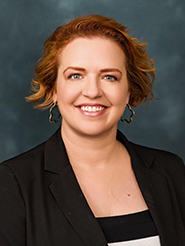
Sen. Kristen Arrington (D-Kissimmee) has sponsored new legislation for recall elections in community development districts. | Photo courtesy of the Florida Senate
The legislation comes in response to a group of residents upset with how their CDD has been run in Osceola County – and no current resource to oust the board members they believe are responsible for a series of alleged misdeeds, including embezzlement and public records violations.
It also follows months of ongoing reporting by Suncoast Searchlight, which published the “Power and Profit” series last year exposing how real estate developers are reshaping Florida’s housing market through the unchecked proliferation of these independent special districts.
CDDs allow developers to issue tax-free, municipal bonds to finance infrastructure construction while passing long-term costs to homeowners, often at a scale that mirrors their property taxes.
Senate Bill 1180 would create a recall election process for CDD governing board members that largely “mirrors existing procedures for municipalities and charter counties,” according to a Senate bill analysis.
The bill requires 10% of the registered voters living in the CDD to sign the petition to start a recall, with the county supervisor of elections then verifying signatures. The recalled member would have a chance to prepare a 200-word defense statement.
It would also create penalties for offenses related to the petition process for things like forging signatures or paying people to sign recall petitions. The bill has passed the Community Affairs and Ethics and Elections subcommittees without opposition.
“The actual constituents came to me completely distressed because they allegedly have a board member who has maybe taken close to a million dollars or more … was not holding meetings timely, canceling meetings, not providing access to documents, basically everything horrible,” Arrington said in an interview this month with Suncoast Searchlight.
“There was no teeth for them to remove this person from elected office,” she said. “So through those conversations, we realized if we could just work on getting them some immediate relief to be able to remove this individual from their position of power, and access to the bank accounts that would, at least, take care of things.”
POWER AND PROFIT: Developers gained government status, then got bonds to build big
Second proposal takes aim at ‘forever fees’
Arrington’s bill isn’t the only reform tackling homeowner concerns over these massive master-planned housing communities. Sen. Jennifer Bradley (R-Fleming Island) has taken aim at so-called “forever fees” that saddle homeowners with the cost of community amenities long after they’re paid off.
As first reported by the Seeking Rents substack, Senate Bill 1498 would eliminate legal arguments that national homebuilder Lennar has been using to maintain control of “perpetual profit schemes” where homeowner associations rent back pools and clubhouses instead of turning them over to the HOA.
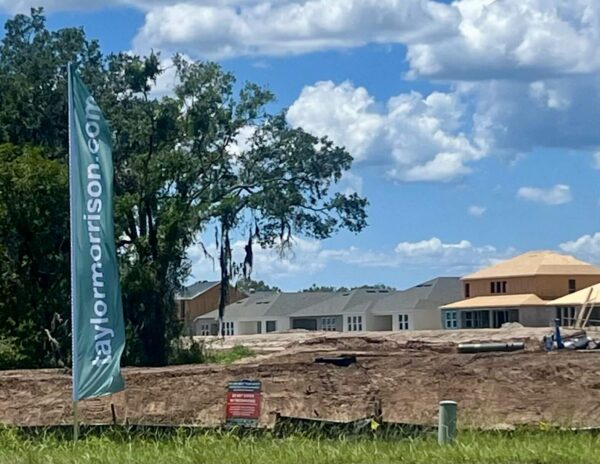
Firethorn is a new community in Parrish. | Photo by Josh Salman, Suncoast Searchlight
The bill gained a powerful ally in early February with Sen. Jim Boyd (R-Bradenton). The local representative will become the president of the Florida Senate after the fall elections. He voted in support of the bill at a recent committee hearing and then posted his support of the legislation on social media.
“Senator Bradley is reining in burdensome fees from for-profit operators, a big win for Florida homeowners’ associations,” Boyd wrote on Facebook. “SB 1498 closes a loophole in mandatory HOA amenity fees, ensures financial transparency, and empowers homeowners to seek remedies for HOA violations.”
CDDs and other special purpose governments operate like homeowners associations on steroids, some with the budget of a small city. Each must be established through a local ordinance or specific state law setting their powers, the ability to levy special assessments and enforce community rules. Most CDD communities in Florida also are governed by HOAs.
POWER AND PROFIT: Developers build the dream, homeowners pay the debt
During the past five years alone, the nearly 90 developer-organized special districts operating between Sarasota, Manatee and DeSoto counties took out $2.9 billion in bonds — giving those developers nine times more cumulative spending power than the city of Sarasota, according to analysis by Suncoast Searchlight.
These local development districts now cover 95 square miles across the Suncoast.
“I’m starting to hear stories across the state from other folks that live in CDDs, just like when I had proposed HOA legislation a couple years ago,” Arrington said. “We have a lot of folks in Central Florida that move from other states or other areas. And so they’ve never heard of a CDD before. And so when you start talking to them about CDDs and HOAs, I think that it definitely is confusing. And you know, folks don’t always know necessarily like what they’re getting into.”
Tired of fees but no improvements, disgruntled homeowners drive change
Aidee Velez has lived in her CDD for about four years after moving to Florida from Philadelphia. She had never heard of a CDD before buying her home in Concord Estates in Osceola County.
At first, she said the community was beautiful and well-maintained. Then the assessments started going up — while the neighborhood deteriorated.
“The community was getting worse and worse,” Velez said. “They stopped doing the lawns. The pool was always closed. The playgrounds were falling apart. Everything was in disarray.”
Velez cited allegations of nepotism, erroneous invoices and unnecessary loans and bond spending. She and a group of concerned homeowners started protesting, prompting Sen. Arrington to meet with them — and spurring the proposed legislation now moving through the statehouse.
“There is no oversight for these CDDs,” Velez said. “If a CDD board member is committing fraud, malfeasance or just not doing a good job, the district can vote them out (under the proposed legislation). It could be amazing.”
About eight years ago, Leonor Pupo similarly moved into her community of Belmont Lakes, a smaller and upscale 42 unit-CDD in Broward County. At the time, she too had no idea what a CDD was. Now, she alleges, the CDD board has not followed proper election laws, while collecting annual assessments for road and infrastructure maintenance that does not get done.
Residents control the board, but some have held their seats for a decade. She also supports the proposed state bill, which she says would allow residents to vote off these board members before their term is up.
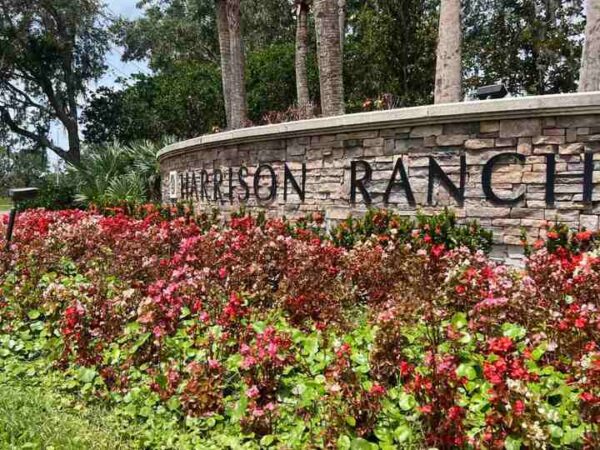
Residents in Harrison Ranch, a community development district in Manatee County, are pushing back against district leaders who have hired family members for top staff jobs, awarded no-bid contracts to other relatives and hosted lavish private parties on the district’s dime. | Photo by Josh Salman, Suncoast Searchlight
“People are busy and just don’t realize this money is then added to their taxes,” said Pupo, who pays about $8,000 per year in assessments. “They don’t get involved … These developers are going to destroy Florida.”
The issues have even reverberated across the Suncoast in CDDs like Harrison Ranch in Manatee County, where residents have voted out HOA members but could not take action against a CDD board that they contend has not looked after homeowners’ best interests.
READ MORE: Manatee homeowners battle rising costs, nepotism in Harrison Ranch
Harrison Ranch residents have pushed back against district leaders who have hired family members for top staff jobs, awarded no-bid contracts to other relatives and hosted lavish private parties on the district’s dime, a Suncoast Searchlight investigation found.
Tensions in the Harrison Ranch CDD escalated to the point that local law enforcement was called to a recent board meeting over disputes between residents. The management company of the Harrison Ranch CDD did not return calls seeking comment for this story.
“We were being gas-lit as a community,” Harrison Ranch homeowner Mimi Sheffer said in an interview this week. “They (CDD board members) have been in power for a really long time, and they were not questioned on their decisions. We still have some time before we can get rid of these people.”
Josh Salman is the investigations editor and Derek Gilliam is an investigative/watchdog reporter for Suncoast Searchlight. Email Josh at josh@suncoastsearchlight.org and Derek at derek@suncoastsearchlight.org.