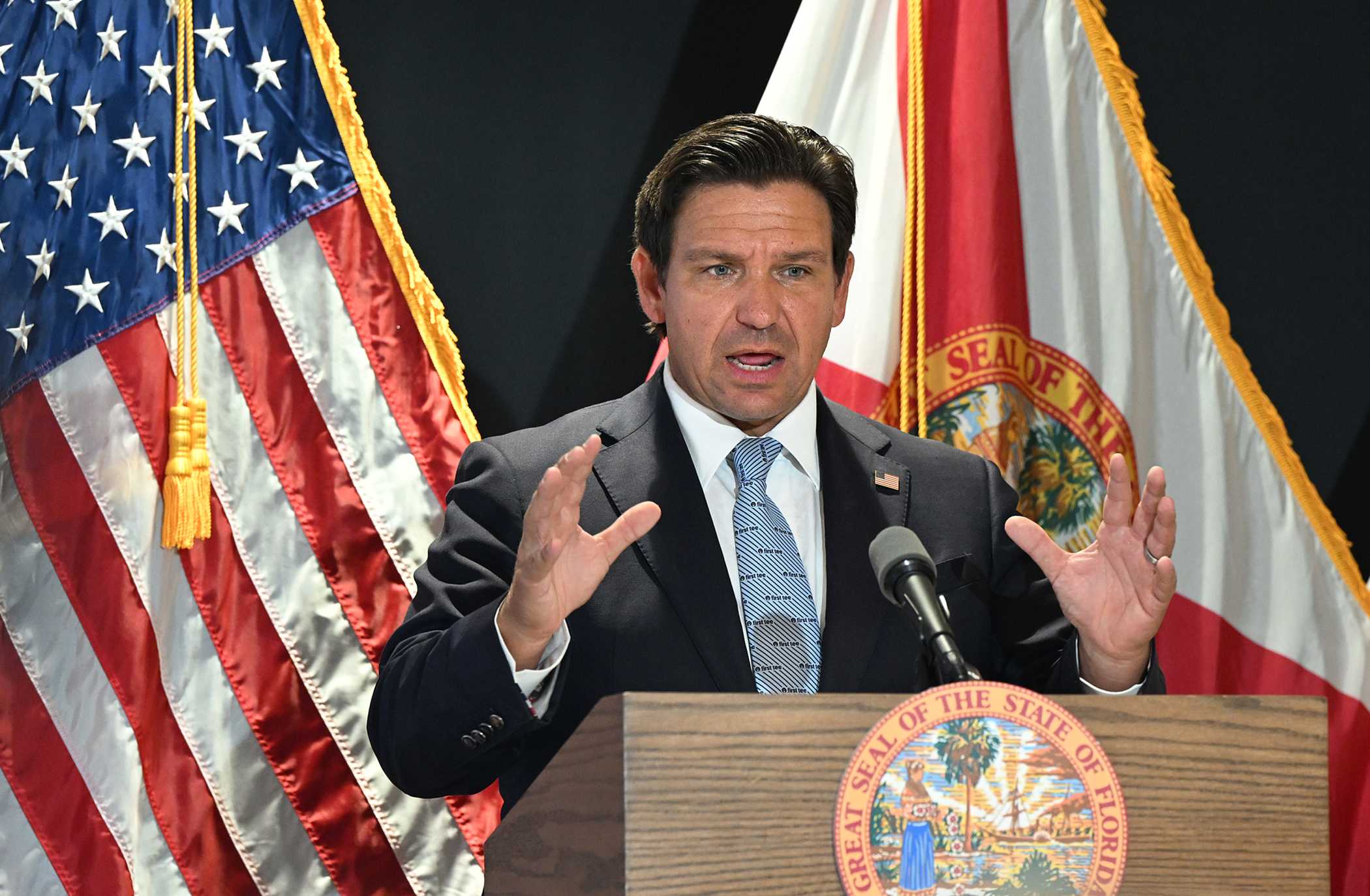
Florida Gov. Ron DeSantis speaks during a visit to Manatee County in July. DeSantis is pushing a proposal that would significantly expand Florida's homestead property tax exemption, a move that would reduce revenue used to fund county services. | Photo by Tiffany Tompkins, Bradenton Herald
DeSantis tax plan could cost Suncoast counties $380 million in 2 years
By: John Dunbar | Suncoast Searchlight, Christian Casale | Suncoast Searchlight and Derek Gilliam | Suncoast Searchlight
Local government officials are pushing back on a plan by Gov. Ron DeSantis to eliminate property taxes for many Floridians, saying the sweeping cuts would cripple basic services that range from classrooms to hospitals and libraries.
If approved by the Legislature this week and then voters as a ballot amendment in November, the plan would cost Sarasota, Manatee and DeSoto counties together more than $380 million over the next two years alone — with no clear way to replace the revenue that funds core services.
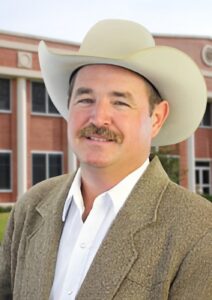
DeSoto County Commissioner Elton Langford | Photo courtesy of DeSoto County
“It’s going to shift that tax burden to everybody else that has to pay taxes,” said long-time DeSoto County Commissioner Elton Langford. His county would absorb a $3.8 million financial hit in fiscal 2027-2028. “We gotta’ make that money up from somewhere to make ends meet.”
The losses would come from a series of changes to dramatically reduce the amount of property value subject to taxation, primarily by raising the homestead exemption from $50,000 to $150,000 in the first year and $250,000 the second year. The measure also would reduce taxes on second homes and commercial property, restrict what local property taxes can fund and make it harder for local governments to replace lost revenue.
And it would create a state trust fund to offset some of those losses, though there was no information about how much money would be available or how the program would work.
The proposal represents what would be one of the most significant overhauls of Florida’s tax structure in decades, dramatically reducing property taxes that fund local governments, schools, libraries, parks, emergency services and other programs.
Property taxes are the primary source of revenue for many local governments, and while debates over tax relief are common in Tallahassee, local elected officials and policy experts warn the plan could force governments to cut services, raise other taxes and fees or seek additional state aid to make up the difference.
“If the state doesn’t make that deficit up,” Langford said, “we’ve got two options: start cutting county services or we’re going to raise the millage rate.”

.
During a statewide call Monday morning, the Florida Association of Counties, which represents all 67 Florida counties, scrambled for answers on how basic government services would go on, saying the overhaul strips away local decisions and could force unprecedented budget shortfalls.
“We know this is a tax shift, they’re framing it as a tax cut,” said Jeff Scala, deputy director of public policy for the organization. “This proposal makes Florida more unaffordable.”
Sarasota County Commissioner Tom Knight was also critical of the plan. He said citizens are starting to understand that local governments will have to get the money from somewhere if they want to keep their local services.
“They’re going to make a political decision for political benefit and then we’re going to be stuck with how to make it work,” he said, and making it work will be “almost impossible.”
Governor pitches tax relief; others see risk
The proposal is the culmination of a months-long campaign by DeSantis to reduce property taxes, which he has repeatedly argued place too heavy a burden on Florida homeowners as both property values and local government collections continue to rise.
DeSantis said the proposal is necessary because property tax revenue collected by local governments has nearly doubled in the past seven years and is expected to reach $83 billion by 2032.
“Florida homeowners need relief,” he said in a press release sent Wednesday announcing his plan, which he dubbed “Save Our Homes from Excessive Property Taxes.”
“Now is the time,” said in the statement, “to stand up for taxpayers, enact a historic reform, and save the home of every Floridian.”
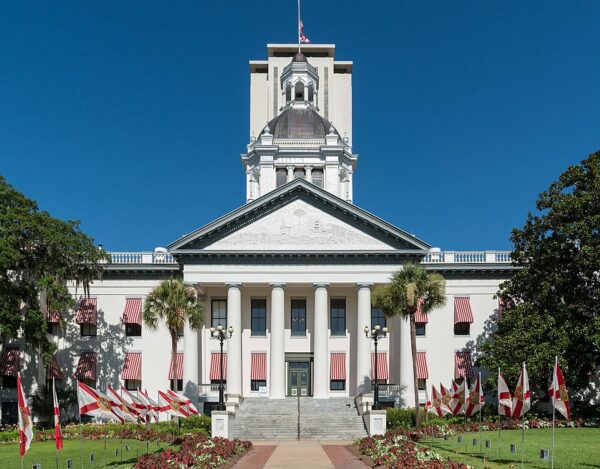
The historic Florida Capitol stands in front of the modern Capitol tower in Tallahassee. A proposed constitutional amendment backed by Gov. Ron DeSantis would significantly expand Florida’s homestead property tax exemption if approved by lawmakers and voters.| Photo courtesy of DXR through a Creative Commons license (BY-SA 4.0), via Wikimedia Commons
But as lawmakers in Tallahassee prepare to vote on the measure, opposition is mounting among local governments, policy experts and county officials who said it’s moving too quickly and could have far-reaching consequences not fully understood.
“The Legislature is about to vote on, arguably one of the most consequential things for cities and counties in generations, in 72 hours and most of them haven’t even read the bill — and the House hasn’t even produced a bill — and let alone understand the implications of it,” said former Republican state senator Jeff Brandes, who left office in 2022 and since founded the Florida Policy Project, of which he is president.
Brandes said the proposal will hit renters especially hard because landlords, who can’t claim a homestead exemption, will pay more and that will be passed along to tenants.
“A third of Floridians rent, they get nothing out of this,” he said. “And if cities and counties start raising other taxes, they’re going to get hit twice. They get no benefit and they have to pay all the fees.”
The joint resolution was filed by state Sen. Bryan Avila, R-Hialeah Gardens. There is also a Democratic co-sponsor: state Sen. Mack Bernard, D-Palm Beach. A House version had not been filed as of publication.
DeSantis also outlined that it “requires local governments to use remaining property taxes solely for core public needs including public safety, education and schools, infrastructure, and natural resources.”
Basic staples of local government — such as libraries, parks, health and human services and affordable housing — would not necessarily be funded.
What it could mean for the Suncoast
Though neighboring counties, Sarasota, Manatee and DeSoto face different challenges.
Sarasota and Manatee are among Florida’s fastest-growing coastal communities, where local governments are under pressure to keep up with traffic, stormwater, public safety and development. Inland DeSoto County remains largely agricultural, though officials there are grappling with growth and major economic development proposals, including a planned AI data center complex.
Despite those differences, all three counties rely heavily on property taxes to pay for the services residents use every day.
Local leaders warned that DeSantis’ proposal would significantly reduce one of their largest sources of revenue, likely forcing difficult decisions about everything from road maintenance to emergency response.

Emergency medical personnel work in Manatee County. County officials warn that Gov. Ron DeSantis’ proposed property tax overhaul could force local governments to make difficult decisions about funding services such as emergency response, parks and libraries. | Photo courtesy of Manatee County via Flickr
The projected impact is substantial. Over the next two years, DeSoto would lose about $9.7 million, according to the Florida Association of Counties. Manatee County would lose about $230.6 million. Sarasota would lose about $140 million.
Fifty-three percent of the typical property tax bill in Sarasota County this past tax year went to Sarasota County Schools. The county government received 28%. The majority of the rest went to the hospital district and to emergency medical services.
Sarasota County’s general fund pays for the sheriff’s department, the service departments, such as transportation and stormwater, parks, libraries, and emergency services. About 59% of that money came from property taxes under the latest budget.
Langford, the DeSoto County commissioner, said he’s tired of the state officials making local leaders look like the bad guys.
“We’re not extorting tax money from people,” he said. “We’re not buying Jamaican vacations.”
The proposal still faces hurdles. A joint resolution requires approval from 60% of lawmakers in both the House and Senate before it would appear on the November ballot, where it would need support from 60% of the voters. Constitutional amendments do not require the governor’s signature.
“Even if it does go to the ballot, there’ll be plenty of time to get to do that vetting,” said Manatee School Board member Charlie Kennedy. “But it has definitely sent a local shockwave through the state to local governments, to say the least.”