
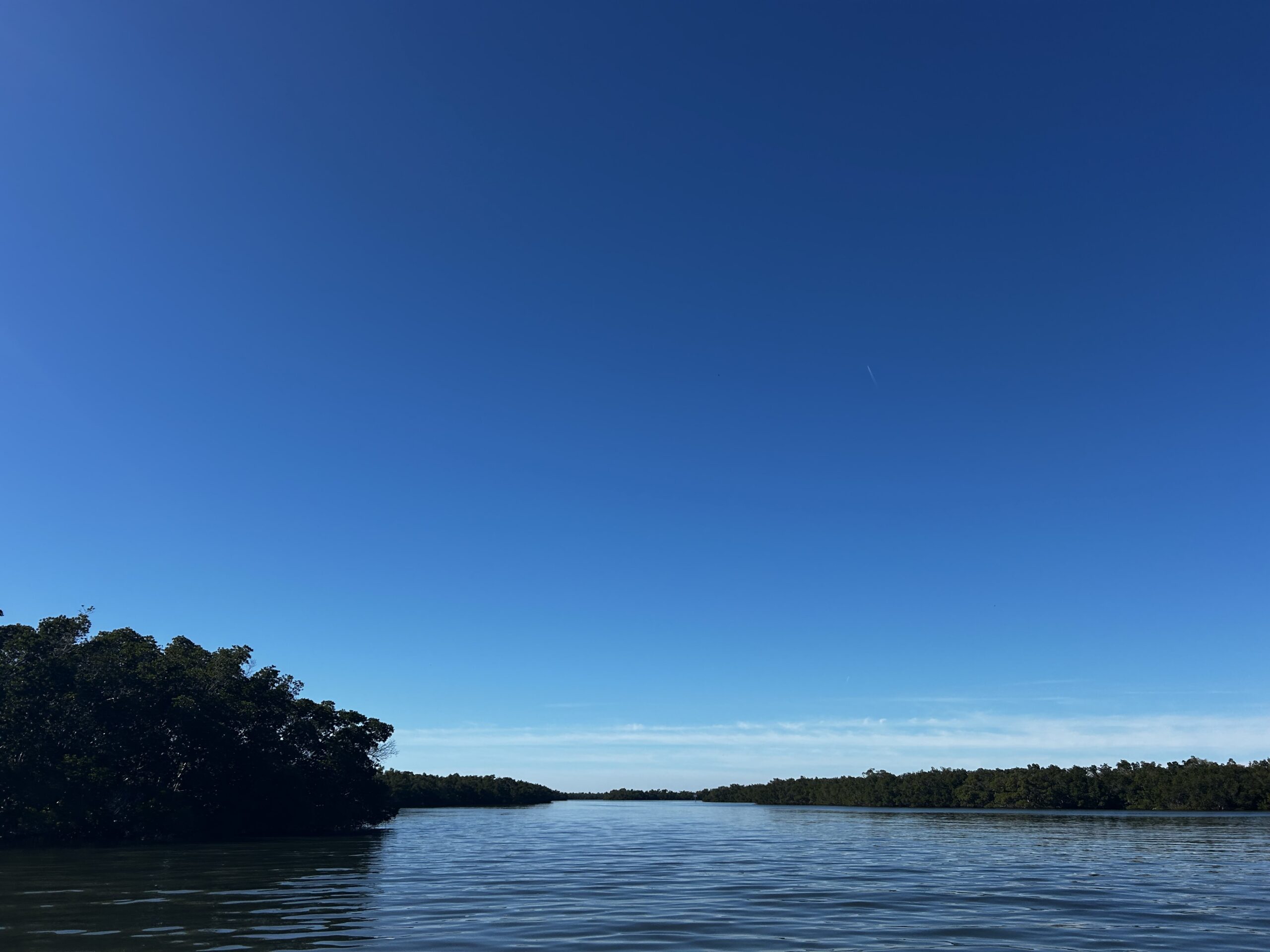
A bill that passed last month sought to stop the creation of a cruise port in Manatee County. | Photo by Alice Herman, Suncoast Searchlight
Environmentalists warned cruise port fix would leave Terra Ceia vulnerable
While state lawmakers drafted a measure to stop a cruise port in Manatee County, environmental watchdogs warned the bill could leave the door open to large-scale development in the Terra Ceia Aquatic Preserve.
Conservation groups publicly praised state Sen. Jim Boyd (R-Bradenton), who took the lead on the legislation, for his efforts — and Boyd has repeatedly emphasized his opposition to the controversial cruise port idea.
But emails obtained by Suncoast Searchlight show that Tampa Bay Waterkeeper, a prominent environmental group that led efforts to quash the cruise port plan, urged Boyd to strike key provisions from the measure and replace them with language to specifically restrict dredging to accommodate commercial vessels.
Environmental and land use attorneys who compared the two versions of the bill at Suncoast Searchlight’s request said the one that ultimately passed was weaker.
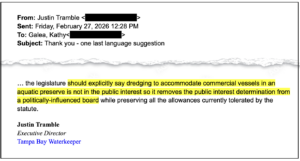
Tampa Bay Waterkeeper Executive Director Justin Tramble reached out to the office of Sen. Jim Boyd (R-Bradenton) with a suggestion to narrow the scope of the bill to restrict plans for a cruise port in Terra Ceia. | Suncoast Searchlight illustration based on the actual email
John Thomas, an environmental and land use attorney in St. Petersburg, went so far as to say it could lay the groundwork for developers to still build a “substantial” commercial marina in the area.
“The idea of a port is just pie in the sky,” Thomas wrote in a six-page analysis provided to Suncoast Searchlight. “It looks to me that the owners gained a path forward with the legislation. And the marina, etc., could be approved by the [the state], potentially without notice to the public.”
In response to a request for comment, Boyd defended his work on the bill and said he is committed to maintaining the natural areas in and around Terra Ceia.
“When a recent proposal threatened the future of the islands and coastlines that border the Terra Ceia Aquatic Preserve, I made a commitment to stop it,” Boyd said in an emailed statement. “With Senate Bill 302 signed into law, this region, the precious coastlines, pristine waters and wildlife habitats are effectively protected from massive transformations that would have destroyed them.”
When SSA Marine, a multinational logistics company, and its local partner, Slip Knott LLC, announced their intention to build a cruise port on the southern end of the Sunshine Skyway Bridge, the backlash was widespread.
Scientists, conservationists and anglers warned that building a large commercial port there — and dredging deep channels through seagrass to accommodate the ships docking — would irreparably harm the water and wildlife.
The cruise industry “is completely unnecessary for this area,” said Glenn Compton, the chairman of Manasota-88, a local environmental advocacy group, in an interview this week with Suncoast Searchlight. “We’re not looking at something that would affect such things as national security…We’re looking at something that’s completely recreational.”
State legislators representing Manatee County were swift to disavow the project. A community group quickly mobilized opposition, rallying hundreds to reject the plan.
Manatee County officials said their staff had even received threats related to the controversial proposal.
“Dredging a channel through there would be bad enough because you’re gonna take out mangroves and flats and grass flats, but that’s not the extent of it,” said Rusty Chinnis, a fly fishing instructor who chairs the board of Suncoast Waterkeeper. “And then there’s all — if it does happen — all the fuel and stuff that comes along with that kind of operation.”
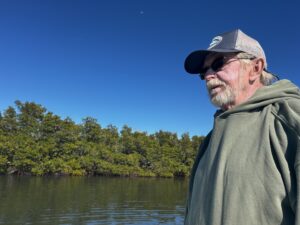
Rusty Chinnis, a fly fishing instructor who chairs the board of Suncoast Waterkeeper, said dredging a channel through Terra Ceia would cause environmental damage to the mangroves, grass flats and other aquatic life. | Photo by Alice Herman, Suncoast Searchlight
Florida requires entities seeking environmental resource permits to demonstrate their projects are not contrary to the public interest. Examples under state statute include projects that would “adversely affect” public health and safety, negatively impact fish and wildlife conservation or cause harmful erosion.
But for areas like the Terra Ceia Aquatic Preserve, which has special protections, the hurdle is even higher. A developer would need to instead demonstrate that it is “clearly in the public interest.”
“The statute itself bakes in what the [public interest] test is, and it doesn’t mention economics,” said Jaclyn Lopez, a law professor at Stetson University and director of the Jacobs Public Interest Law Clinic for Democracy and the Environment.
‘Dredging to accommodate commercial vessels is not in the public interest’
A subsidiary of SSA Marine bought Rattlesnake Key, a 724-acre undeveloped island in the Terra Ceia Aquatic Preserve, for $18 million in October. Months later, the umbrella company announced plans to develop a cruise port on adjacent land owned by a business partner alongside the Skyway.
In promotional materials for the project, SSA Marine and Slip Knott argued building a port would stimulate the local economy and that the companies would preserve Rattlesnake Key, calling “environmental stewardship” central to the proposal.
Representatives for SSA Marine did not return repeated requests for comment regarding the status of the cruise port proposal.
 Amid the public outcry, Boyd sought to introduce legislation aimed at deterring the project, adding an amendment to the broader Senate Bill 302, which focused on coastal conservation.
Boyd’s amendment prohibits further dredging in Terra Ceia Aquatic Preserve, with caveats for public navigation projects and to clear stagnant water. It also allows for “minimum dredging” for the creation of marinas, boat ramps and piers.
After Boyd drafted the language, public records show, Tampa Bay Waterkeeper Executive Director Justin Tramble reached out to him with a suggestion to narrow its scope.
“You can probably strike the majority [of the listed caveats],” Tramble wrote in a Feb. 27 email. Instead, he suggested adding language from Stetson attorneys partnering with him on the effort, specifying that “dredging to accommodate commercial vessels is not in the public interest.”
He added that “the Legislature should explicitly” name commercial vessels rather than leaving the public interest determination to “politically-influenced” state officials.
Boyd stuck with his version of the bill, and Gov. Ron DeSantis signed it into law during a March 19 press conference in Bradenton, saying it would prevent the kind of dredging required to allow large ships to pass through the preserve.
A spokesperson for Boyd’s office said Tramble had offered his suggested language too late in the process.
.
In an interview with Suncoast Searchlight, Tramble said Boyd had had “genuine conversations” with his organization and added that he appreciated the senator’s efforts. He said Tampa Bay Waterkeeper is continuing to monitor the issue and would push for expanded protections.
Lopez, the Stetson professor, said she thought Boyd clearly intended to protect the preserve.
“It’s clear to me, based on the representations that the sponsor made and what others have made that voted for bill, that the intent of of tightening up the language or addressing the language specific to the Terra Ceia Aquatic Preserve was so that it would prevent any projects, including a dredge for a port that are not in the public interest,” Lopez said.
“Having said that … if the Legislature wanted to be super clear about that, they could have just put those exact words right in the amendment,” she said. “But they didn’t.”
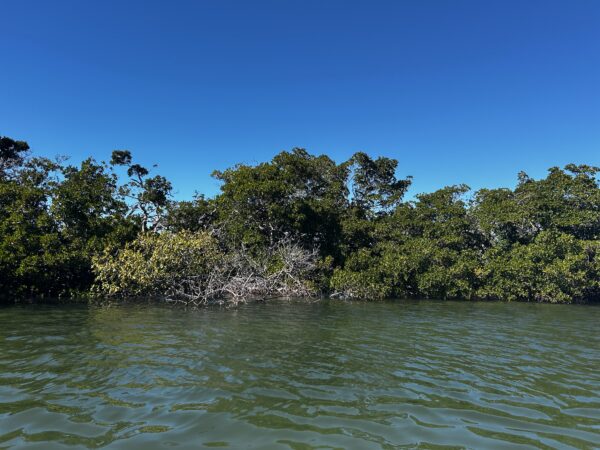
Environmentalists worried that a proposed cruise port in Terra Ceia would have threatened the Terra Ceia Aquatic Preserve, which stretches from the south end of Port Manatee into Tampa Bay. | Photo by Alice Herman, Suncoast Searchlight
Thomas, the land use attorney, was more skeptical about the law’s impacts. He pointed to the line in the amendment specifying that some dredging to accommodate a marina would be permissible.
“At a minimum, the statute clarifies the path forward for a marina application in the Terra Ceia preserve,” he said.
Thomas also noted that the amendment requires public notice before dredging for water quality and aesthetic purposes — but not for building marinas, boat ramps or docks.
“I don’t think that this adds protection,” he said.
Alice Herman is an investigative/watchdog reporter at Suncoast Searchlight. Email Alice at alice@suncoastsearchlight.org.