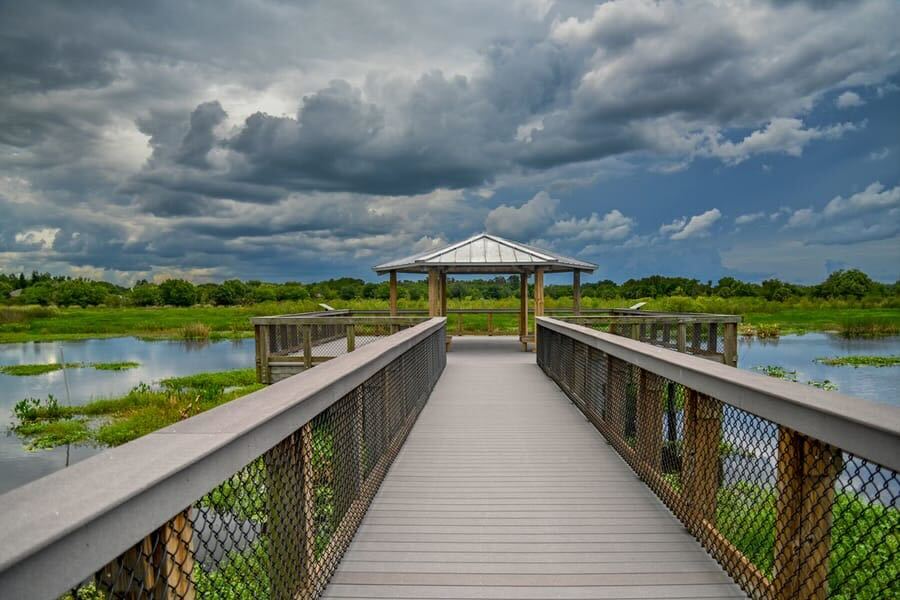
On the popular bird tracking app eBird, Celery Fields is ranked as the third most popular birding hotspot in Florida. Photo provided by Sarasota County.
Sarasota County voted against a development next to a bird sanctuary. The builder won’t quit.
Three times now, environmental advocates hoping to stave off a housing community proposed next to the Celery Fields bird sanctuary have seen huge victories in the Sarasota County Commission chambers.
But a developer that calls itself “America’s largest homebuilder” is still carrying on with its plans.
D.R. Horton has continued a relentless effort to bring a new housing community to the edge of Celery Fields, now turning to a 1990s state law to challenge the commission’s prior decisions and steer the development forward through court mediation.
Dozens of residents and environmentalists are still fighting the proposal they fear would doom a birding sanctuary that provides habitat for more than 250 different species and draws tens of thousands of visitors each year.
Sarasota Audubon President Sara Reisinger said as long as D.R. Horton has a mechanism to keep pushing its development, the company won’t stop.
“There is evidence that if there is development, the birds will flee,” she said, citing a decline in bird population at nearby Ackerman Park after a burst of apartment buildings and county facilities went up nearby.
A key hearing in D.R. Horton’s push — initially scheduled for April 27 before a special magistrate — was canceled, according to Susan Schoettle, a former assistant county attorney who has represented Sarasota Audubon throughout the case.
Schoettle said she received word from the county attorney’s office late Thursday, but no explanation was provided. The county did not immediately return Suncoast Searchlight’s call or email seeking comment.
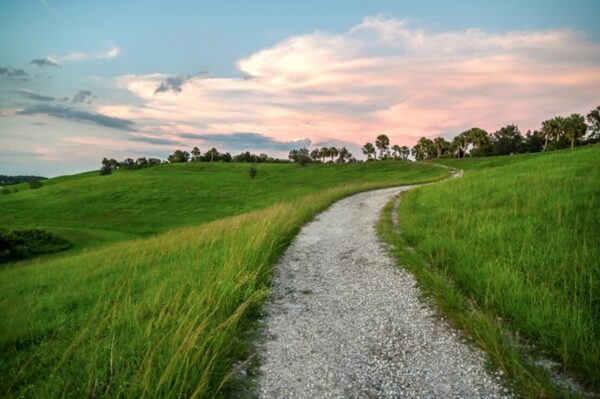
D.R. Horton has continued a relentless effort to bring a new housing community to the edge of Celery Fields. | Photo provided by Sarasota County.
D.R. Horton first proposed transforming the Smith Farm near Celery Fields into 170 new homes. To do so, it needs Sarasota County to rezone the property from “Open Use Rural” to “Residential Single Family.” In 2024, the Sarasota County Planning Commission declined to recommend the project.
The following February, the developer tried again, this time pitching just 126 homes. But again, the proposal died after about 60 public commenters rallied against the project before the county commission, which voted unanimously against it.
At the time, commissioners cited concerns that much of the development would sit atop a flood plain, which was under several feet of water after Hurricane Debby’s flooding in 2024.
D.R. Horton then turned to the Florida Land Use and Environmental Dispute Resolution Act, a process created by the Florida Legislature in the 1990s to allow mediation between municipalities and developers to avoid a lawsuit after a construction effort is rejected.
Representatives from D.R. Horton’s Sarasota-Manatee office did not respond to a request for comment for this story.
Sarasota County also declined comment, citing pending litigation.
The next hearing between the county and D.R. Horton was supposed to be on Monday. The special magistrate in the case was expected to rule on the county commission’s vote and issue a report, according to Schoettle.
It is unclear if or when the hearing will be rescheduled.
D.R. Horton could then sue Sarasota County in a final attempt to attempt to push through its development.
In April 2025, Jacob Schumer, D.R. Horton’s attorney in Winter Gardens, wrote in a letter to the Sarasota County Commission that the earlier decisions were “not supported by competent, substantial evidence.”
He argued that the 50-acre Smith Farm and Celery Fields’ more than 400 acres are already flanked by residential developments, as well as the new county administration building, so the commission’s rejection for incompatibility was not on solid ground.
A month later, the county emphasized in a memo to the special magistrate that its land-use policy restricts some zoning based on special circumstances.
“Based on the unique nature of this property due to its proximity to the Celery Fields, the owner should reasonably expect the property would have limited development potential,” County Attorney Josh Moye wrote.
Once farmland, Celery Fields was converted into a drainage wetland after a pair of storms caused intense flooding in the early 1990s. An unintended benefit was the emergence of birds like the Anhingas, Roseate Spoonbills and Palm Warblers that are among the dozens of species that congregate there on any given day.
Celery Fields has for years been slowly squeezed by encroaching development; climb the steep observation hill and one can see the new county administration building and new apartment complexes to the north, as well as new county facilities to the east.
On the popular bird tracking app eBird, Celery Fields is ranked as the third most popular birding hotspot in Florida. A Facebook group where users post photos from their trips has more than 32,000 members.
Sarasota Audubon and those who cherish the natural habitat say D.R. Horton’s project embodies the local frustration with the disappearance of green space in favor of concrete and pavement.
Advocates hope Sarasota County will instead purchase Smith Farm and expand Celery Fields. Sarasota Audubon began work last year on a project to “re-wild” the land to expand the habitat eastward.
“We will not give up,” Reisinger said. “We will continue to fight this.”
Christian Casale is a local government/politics reporter for Suncoast Searchlight. Email him at christian@suncoastsearchlight.org.