
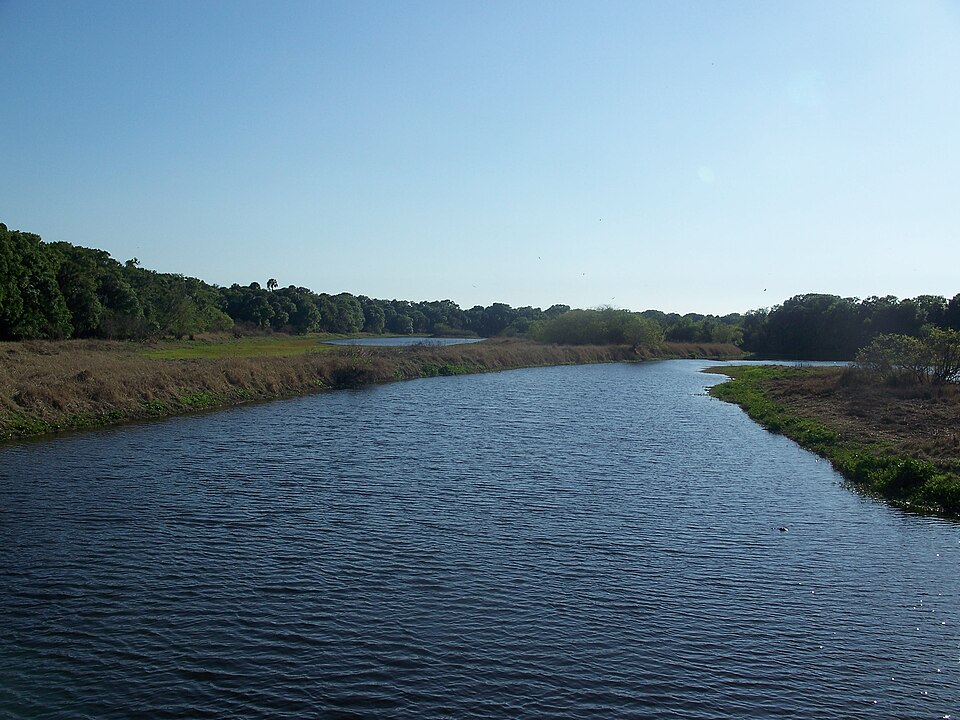
As much as 86% of wetlands in Florida could lose federal protections under proposed federal changes. | Photo courtesy of Ebyabe via Wikimedia Commons
Wetlands ‘created Florida.’ A new proposal could threaten their existence.
A team of University of Florida researchers recently set out to kayak the headwaters of Myakka River but found themselves dragging their boats across stretches of it that dry out seasonally.
That natural cycle of wetting and drying soon could cost parts of the Myakka watershed and others like it their federal clean water protections under a proposed regulatory rollback.
Abbey Tyrna, executive director of Suncoast Waterkeeper, recalled hearing about the researchers’ experience as she raised concerns about the proposal, which could leave wetlands across the region more vulnerable to real estate development, even though they play a critical role in protecting water quality and preventing flooding.
“These are places that are extremely important to our well-being, and they could no longer be protected,” said Tyrna, executive director of the Suncoast Waterkeeper, whose team of policy experts is focused on safeguarding the area’s environments and waterways. “They could be filled (with dirt) and drained and have homes put on there.”
As much as 86% of wetlands in Florida could lose federal protections under the proposed changes, Tyrna said.
At issue is a proposal by the U.S. Environmental Protection Agency and the U.S. Army Corps of Engineers to narrow the definition of “waters of the United States,” which determines which wetlands and waterways are covered by the federal Clean Water Act. It follows a 2023 U.S. Supreme Court decision that limited federal protection for wetlands. The agencies are now working to translate the court’s ruling into new policies.
The EPA said the rule is intended to provide a clearer definition of federally protected waters and establish a framework for federal and state authorities to work together. In a statement to Suncoast Searchlight, the agency called a “clear and durable definition” of protected waters a “top priority for the Trump EPA,” and said local authorities are best positioned to understand their water resources.
The EPA and Army Corps have also acknowledged potential environmental trade-offs. In an analysis accompanying the earlier proposal, they said that when affected waters are damaged or developed without measures to avoid, minimize or compensate for the impacts, the result could be “forgone benefits over time, including habitat support, recreation, and aesthetic benefits.”
The agencies have not finalized the rule. A public comment period for the September supplemental proposal closed Oct. 9.
Tyrna said there’s no projected implementation for the proposal and that legal challenges could draw out the process for at least a year.
Loosening federal guardrails doesn’t mean these wetlands immediately become fair game to real estate developers. State and local laws would still apply –– including Florida laws around mangrove trimming and vegetative removal –– and projects can face other local permitting requirements.
But environmental advocates warn that wetlands excluded from federal jurisdiction could have fewer safeguards going forward.
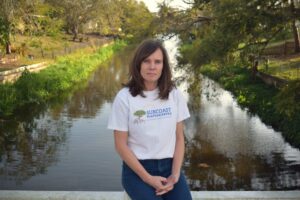
Abbey Tyrna, executive director of Suncoast Waterkeeper, said wetlands excluded from federal jurisdiction could have fewer safeguards going forward. | Photo by C. Todd Sherman for Suncoast Searchlight
Suncoast staples like Peace River, Wellen Park and Myakka State Park would be impacted by the proposal. Sarasota is especially at risk since most wetlands in the region are isolated, Tyrna said.
“It’s just going to put all of the things that we hold dear about Florida at risk,” Tyrna said.
What losing federal protections for wetlands could look like
Developing over unprotected wetlands isn’t just about disrupting ecosystems.
David Lewis, an associate professor at the University of South Florida specializing in ecology, said wetlands help filter drinking water by removing pollutants from surface waters.
“I’m troubled by how little science often enters into public discourse about policies that would be good for the vast majority of people,” Lewis said. “Regardless of how you feel about environmental advocacy issues in the abstract, everybody needs an adequate supply of clean water.”
Lewis said losing protections for isolated wetlands could hurt water quality because wetlands are often connected underground. They help filter and regulate water that eventually flows into rivers and streams.
“They’re only isolated in the sense that you draw a circle around them on a map and see that they’re not adjacent to a river,” Lewis said. “Isolated is actually a very misleading descriptor because they are connected through groundwater.”
Wetlands also protect against tropical storm and hurricane damage. In a storm-prone state like Florida, Lewis said it’s another example of wetlands acting as vital infrastructure for communities.
In coastal areas of Florida, wetlands provide nearly $2 million worth of protection from major storms for every square mile, a 2020 Sun and Carson report found.
Headwaters, or the small stream where rivers begin, in Manatee County alone save more than $130 million in potential damages from future tropical storms or hurricanes, a 2024 Suncoast Waterkeeper newsletter estimates.
“If you don’t have wetlands, rivers will be raging flash floods after rains, and then tiny dry trickles in between,” Lewis said. “But with wetlands in the landscape around rivers, they’ll absorb a lot of storm water as it’s raining, and then release that slowly during dry periods, which dampens the peaks and troughs in water flow rate in a river.”
Humans aren’t the only ones that rely on wetland resiliency to function.
Some species, including salamanders, wood ducks and muskrats, depend on wetlands to survive.
Developing over these wetlands would put animals and plants that rely on them to complete their life cycle at risk.
Additionally, without these ecosystems thriving, Lewis said Florida’s reputation as a tourist destination could be in jeopardy.
“People come to Florida and spend money here because of the tourism opportunity, and it’s not all to go to theme parks,” he said. “We are a jewel of subtropical biome that you can’t find anywhere else in North America, really north of the border with Mexico.”
Sarasota’s own wetland protections might not be enough
On top of federal and state protections, Sarasota County has local ordinances in place that protect local wetlands.
No development over wetlands or other sensitive natural environments can be carried out without obtaining a permit from the county. The public also has the right to file a complaint against any entity that obtains a permit.
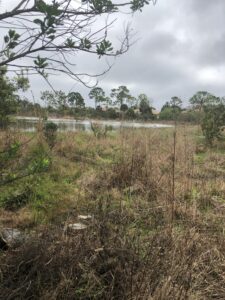
Suncoast staples like the Peace River, Wellen Park and Myakka State Park would be impacted by the new federal proposal. | Photo courtesy of Abbey Tyrna.
The county ordinance also refers to wetlands as a collective whole, and does not differentiate isolated versus connected ones, like the EPA’s proposal.
Still, Tyrna said she worries that local regulations may not be enough if federal protections are loosened.
“The plan gives too much leeway to mitigation and devalues degraded wetlands,” Tyrna said.
She pointed out that without federal protections, it’s much easier for local governments to alter their own rules.
She noted the recently-approved expansion in Wellen Park to make way for Village One, a community of new homes. The 54-acre project encompasses 28 acres of wetlands, but just two wetlands –– or less than half of what’s there –– are protected, she said.
Tyrna said zero wetlands would have been protected under the new federal regulations.
Developing over land crucial to regulating water quality and cycles would create numerous ecological issues, especially at a time when Sarasota is facing extreme water shortage conditions.
Suncoast Waterkeeper has put out calls to action for people to write letters to the EPA and Army Corps of Engineers urging them not to extend the rule and has submitted comments pushing back to both agencies.
“Wetlands are what created Florida,” Tyrna said. “If you love anything in nature that Florida has to offer, that was brought to you by a wetland. If you like drinking water, swimming water, eating fish, wetlands provide the services that allow you to enjoy that.”
Clinton Engelberger is a contributing writer and fact checker for Suncoast Searchlight and has freelanced for The Times Union, OutSFL and The Washington Blade. Email Clinton at clintonengelberger@gmail.com.