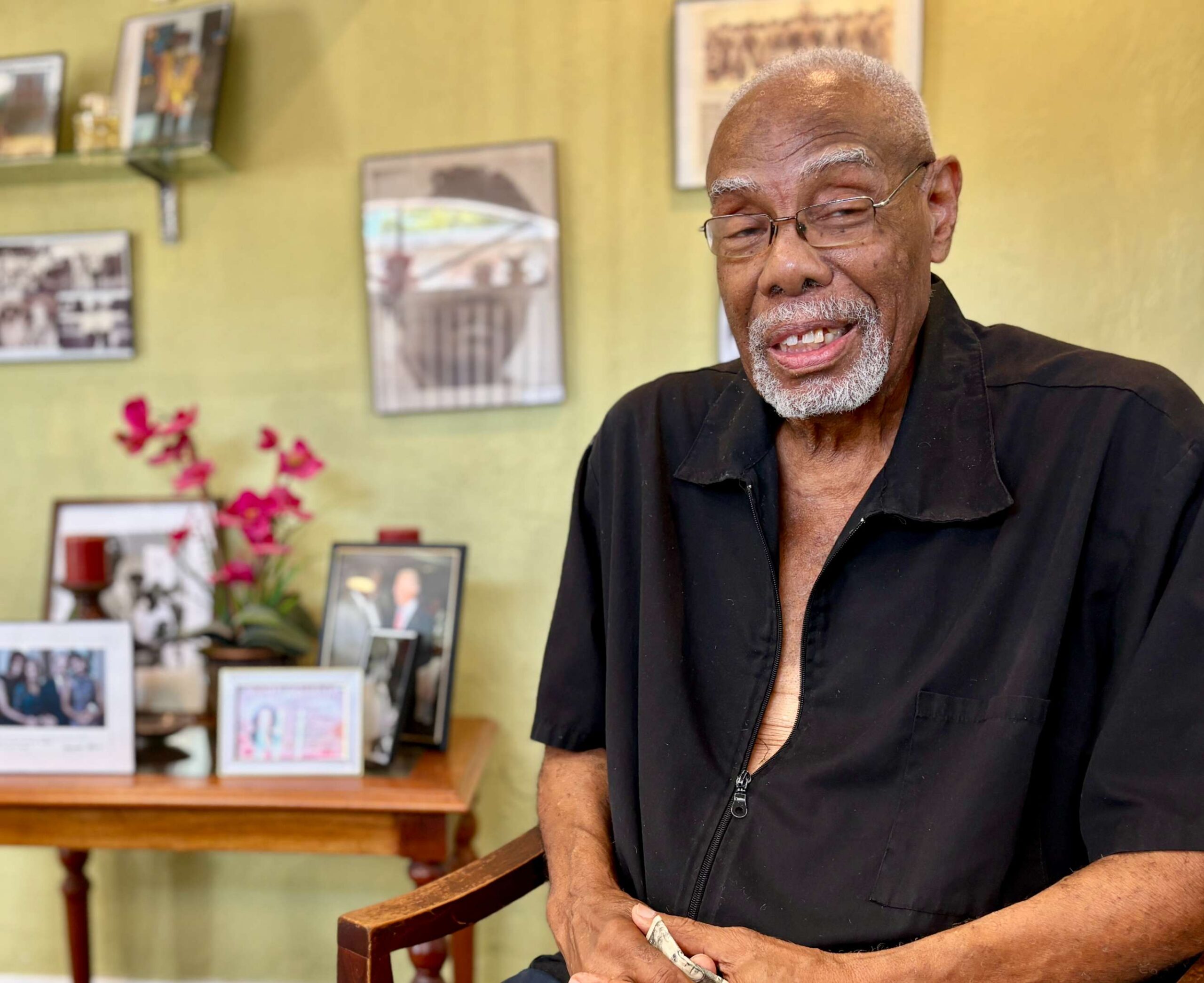
Jetson Grimes, owner of Jetson’s Creative Trends hair salon in Newtown, supports efforts to revitalize the neighborhood but wants redevelopment to preserve its history and character. Grimes opposes early concepts that would give the Dr. Martin Luther King Jr. Way corridor a French Quarter-style look. | Photo by Emily Le Coz, Suncoast Searchlight
Newtown revitalization pitches community improvements. Some fear gentrification
Without the planned economic revitalization of Newtown, Jetson Grimes, owner of Jetson’s Creative Trends hair salon since 1982, isn’t sure neighborhood businesses like his will survive.
“It would probably just go away,” Grimes said. “Once your community starts deteriorating, that’s when gentrification happens.”
Born and raised in Newtown, Grimes has seen the historically Black community persevere through decades of underinvestment and neglect. The neighborhood, situated within the economically thriving city of Sarasota, has survived segregation, the crack epidemic of the 1980s and limited resources — all because its community of Black business owners has created a network of economic and social support.
But as resources dwindle and Newtown youth find fewer opportunities in the area, he and other residents are ready for change.
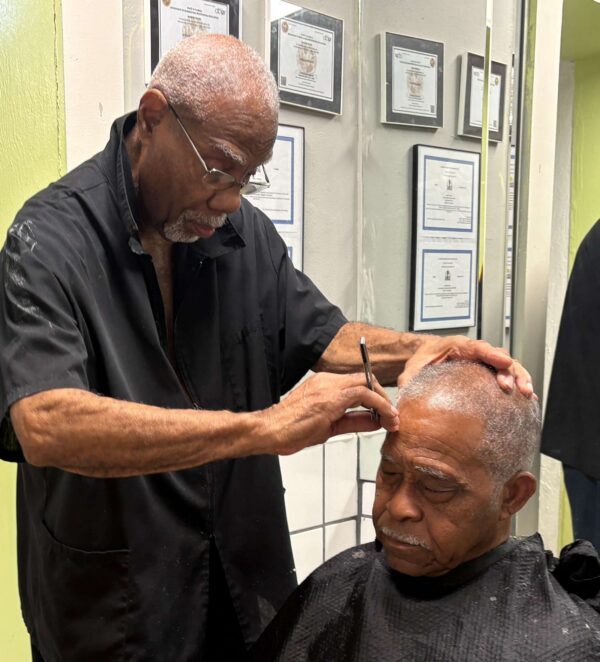
Jetson Grimes cuts longtime client Johnny Bell’s hair at Jetson’s Creative Trends in Newtown on Thursday, Sept. 17, 2026. Grimes has owned the salon since 1982. | Photo by Emily Le Coz, Suncoast Searchlight
Across ongoing community meetings, local leaders and organizations, including the Newtown Community Redevelopment Agency and the Newtown Business Council, have presented early plans and renderings for what a revitalized Newtown could look like, featuring new shops, restaurants, events and cultural hubs that honor its art and history.
During these presentations, residents seemed equal parts enthusiastic about the investments and skeptical about how this promised change could attract outside developers and lead to gentrification.
The plan proposes an overhaul of Dr. Martin Luther King Jr. Way, which it describes as the “commercial main street and spine of Newtown.” That proposal is in its early stages, and no timeline on the project’s completion has been set.
However, concerns raised at the meetings have provoked debates around who gets to shape Newtown and who will benefit from the investment.
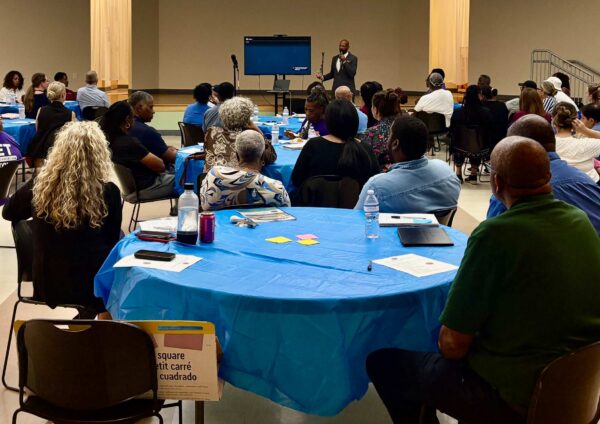
More than 100 people gathered at the Robert L. Taylor Community Complex on Aug. 25 for the Newtown Thriving Community Conversation, where residents heard updates on redevelopment plans and discussed priorities for the neighborhood’s future. | Photo by Emily Le Coz, Suncoast Searchlight
Residents have voiced a range of ideas and concerns, but one theme has emerged repeatedly: They want investment without losing the community’s identity.
“We don’t need another study group. We know what we need,” former Sarasota Mayor Willie Shaw said. “We’re the consultant.”
Shaping Newtown’s future
Unofficial plans call for a dramatic transformation of Dr. Martin Luther King Jr. Way, a major commercial corridor through the heart of Newtown. Early renderings show a makeover similar in style to the French Quarter in New Orleans.
The plan calls for clusters of businesses, commercial buildings and residential buildings designed to make the corridor more walkable and transit-friendly.
The vision extends beyond economic development. The plan also points to an expanded arts and culture scene throughout the corridor. Vacant lots would be cleared for performances and festivals that could feature music, dancing, food-themed events or movie nights.
Other ideas include monthly speakeasies, book readings, plays and reenactments, as well as developing major quarterly and semiannual events intended to become established traditions for the neighborhood.
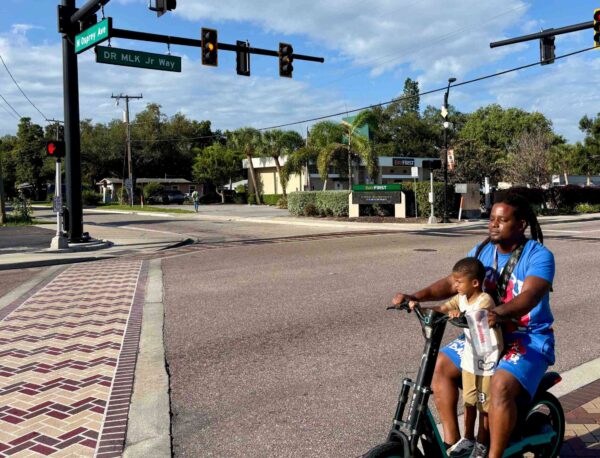
A man and child ride a scooter across the intersection of Dr. Martin Luther King Jr. Way and North Osprey Avenue in Newtown. Early revitalization plans call for changes along the MLK corridor aimed at making it more walkable and transit-friendly. | Photo by Emily Le Coz, Suncoast Searchlight
To put the plan in motion, leaders want to connect local small businesses with development organizations that can provide technical assistance to aspiring and existing entrepreneurs. Once the network grows, those businesses can then put up a branded decal with a QR code that leads guests to a page promoting new events coming to Newtown.
The broader revitalization extends beyond Dr. Martin Luther King Jr. Way.
Across numerous community meetings over the past couple of years, residents have identified priorities to uplift. Plans include the construction of an Sarasota Memorial Urgent Care facility, additional parking spaces and garages, and improved security cameras.
They also want to see more arts events such as a Music in the Park series and food festivals, along with educational opportunities for youth on topics like gun safety and social media.
Preserving Newtown’s identity
These changes would come to a town that’s been historically underserved. The median household income in Newtown has hovered in the $20,000 range over the past few years, just a crumb of Sarasota’s citywide median of $72,000 in 2024.
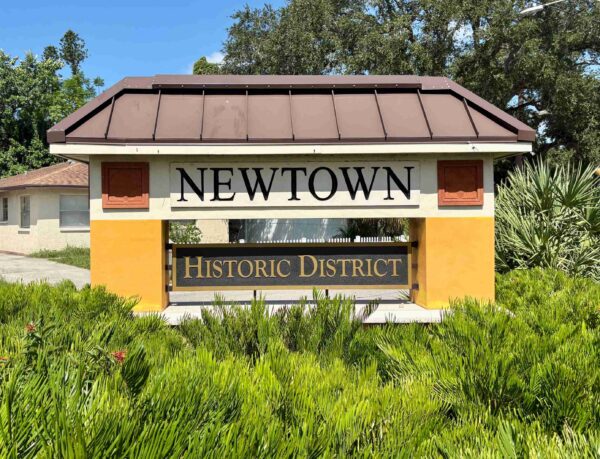
A sign marks Newtown’s historic district in north Sarasota. Residents say preserving the historically Black neighborhood’s identity and character should be central to plans for its revitalization. | Photo by Emily Le Coz, Suncoast Searchlight
Shaw said more investment into Newtown is long overdue, but he doesn’t want its rich history to get lost along the way.
Sarasota City Commissioner Kyle Battie said Newtown’s 2024 listing in the National Register of Historic Places is a major factor in preventing gentrification.
Battie said the regulatory hurdles developers face in historic districts lead to higher expenses and slow construction timelines, which can often scare them off.
“It’s not just to preserve the history of [Newtown], but also to preserve the community,” Battie said. “Because if not, Newtown would go the way of Overtown, and basically relegated to a marker that says ‘Here lies the second African American community in the city.’”
Battie is referencing the Rosemary District, Sarasota’s first African American district originally known as Overtown. Over time, many Black residents moved north to Newtown, including Battie’s father.
That is a fate he doesn’t want to see for Newtown.
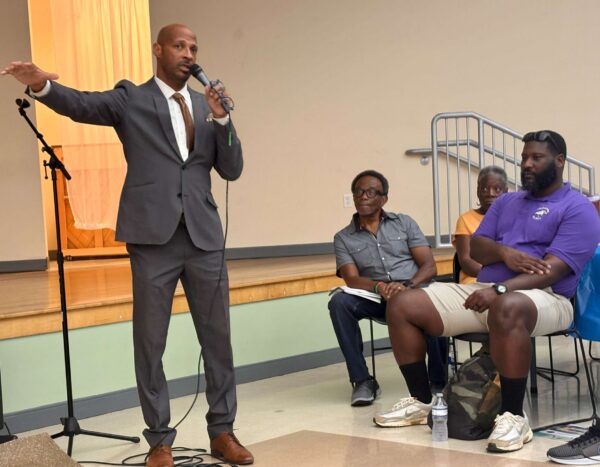
Sarasota City Commissioner Kyle Battie speaks during the Newtown Thriving Community Conversation on Aug. 25 at the Robert L. Taylor Community Complex. The event brought residents together to hear updates on revitalization efforts and discuss priorities for Newtown’s future. | Photo by Emily Le Coz, Suncoast Searchlight
Helping businesses and homeowners prosper without succumbing to gentrification means ensuring they own and build equity on their property, Grimes said. Otherwise, he said it’s much easier for outsiders to buy up property for little to nothing.
Investing in Newtown can create more wealth in the community, Grimes said. That’s the difference between revitalization and gentrification for Grimes — protecting community members, not pushing them out.
Shaw wants the city to advocate for government earmarks to help Newtown build up its infrastructure. This could include street renovations like drainage and sidewalk improvements, as well as updated crosswalks and lights.
“There’s nothing and no place in the city more apparently needing that funding than Newtown,” Shaw said.
Putting ideas into motion
Ed James III, a fourth-generation Sarasota resident, knows the importance of generational prosperity. His father played a major role in desegregation of the Sarasota County public libraries, and his great-grandmother helped desegregate Lido Beach.
It’s residents like his family members that have shaped Newtown and Sarasota into what it is today, which is why James III said it’s so important that the community has a “seat at the table.”
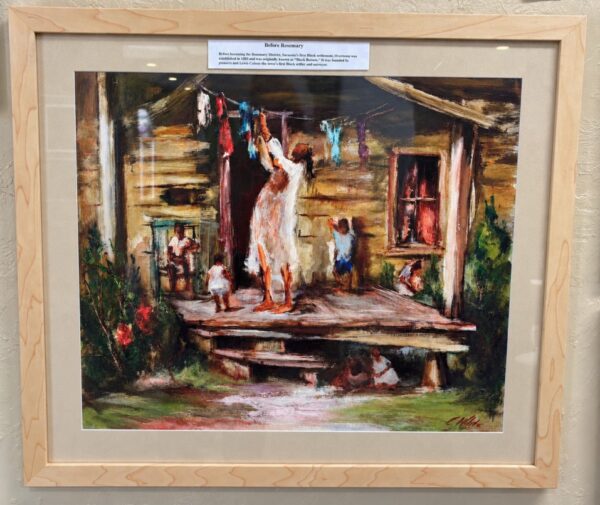
“Before Rosemary,” an artwork depicting Sarasota’s early Black community of Overtown, hangs in Jetson’s Creative Trends hair salon in Newtown. Overtown, later known as the Rosemary District, was Sarasota’s first Black community. | Photo by Emily Le Coz, Suncoast Saerchlight
The concept of revitalizing Newtown isn’t new — James III remembers when similar talks occurred in 2002. That’s been the source of skepticism for some residents who wonder if plans will be seen through this time.
Though he believes Sarasota has a good vision for the future, what’s been missing is a mechanism to keep residents in the room “after the ribbon cutting.”
“We’ve heard that term revitalization before, but revitalization that isn’t co-authored by the people who stayed through the lean years isn’t revitalization,” James III said. “It’s just relocation with better landscaping.”
Transparency and community input are the only ways to avoid a gentrified Newtown, he said. James III wants a public dashboard that shows who is benefiting from CRA spending, a resident oversight body with genuine authority and dedicated funding for Black-owned businesses along the MLK corridor.
“The question that this community is asking isn’t, ‘Is there a plan?’ It’s, ‘Will this one actually change who holds the pen?’” James III said.
Residents like Grimes have warded off school closures and highway construction before, but the revitalization plan gives them a chance to do more.
It’s not just to give Newtown a better reputation. It’s to give those who have poured everything into the place they call home a reason to stay.
“We’re at a point now where we need to start executing some of the things that we need to move the community forward and sustain this community for the next generation, for the next 100 years,” Grimes said.
Clinton Engelberger is a contributor for Suncoast Searchlight. Email Clinton at clintonengelberger@gmail.com.