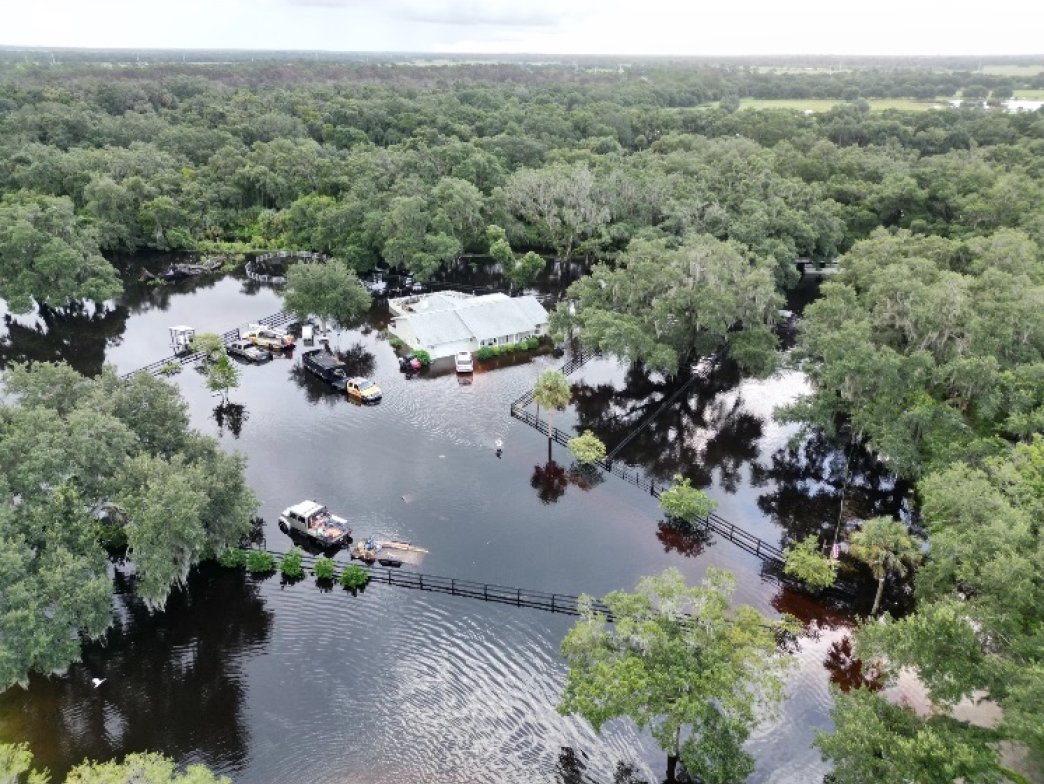
Flooding in Sarasota County during Tropical Storm Debby. | Photo courtesy of Pam Furner
Two years after devastating floods, Sarasota County approves $32 million in fixes
After the rainfall from Hurricane Debby washed through Sarasota in 2024, some homes in the Amish-Mennonite village of Pinecraft sat underneath nearly 10 feet of water.
After the storm surge from Hurricane Helene, some sections of the barrier islands were uninhabitable for months, and businesses on St. Armands Circle were pushed to the brink.
At Celery Fields, the county’s primary flood control facility, a critical gate was left open during Hurricane Debby, exacerbating the floodwaters for hundreds of middle-class homes nearby.
Two years later, officials are finally poised to address the breakdowns. The Sarasota County Commission approved $32 million in stormwater projects Tuesday to help prevent future floods at Bahia Vista, St. Armands and Celery Fields following the severe storms in 2024. It was the first meeting in the county’s new $100 administration building.
The stormwater projects are primarily funded through Resilient SRQ, the county’s funding mechanism for federal recovery dollars from the 2024 hurricane season. Sarasota County received $210.5 million from the federal government for those storms and another $201.5 million for Hurricane Ian in 2022.
A small amount of additional funding will come through the county’s sales tax program.
Alex Krumm, a resident of the Laurel Meadows subdivision that has sued the county, has spent more than $150,000 renovating his home. The neighborhood flooded during Debby after a breach in a berm — that the county had not maintained — funneled water into the community. Neither he nor many of his more than 80 neighbors carried flood insurance.
“I am extremely upset with how Sarasota County has handled this,” Krumm said. “It’s offensive. The truth is they flood us. It’s ethically, morally and probably legally wrong.”
Just more than a year ago, the county shook up its stormwater department under the new leadership of Ben Quartermaine. The move came after widespread criticism of county stormwater policies that led to the historic flooding wrought by Hurricanes Debby, Helene and Milton in 2024.
An investigation by Suncoast Searchlight and Florida Trident found the county had downplayed its flood risk and ignored signs that its infrastructure was not capable of handling a major storm.
READ THE FULL INVESTIGATION: Sarasota County officials downplayed flood risk. Tropical Storm Debby exposed their failures
Since then, the county created a new stormwater department and has approved and broke ground on a rash of stormwater projects, ranging from a comprehensive dredging of Phillippi Creek to maintenance of off-road ditches and retention ponds.
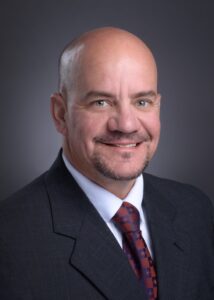
Sarasota County Stormwater Director Ben Quartermaine | Photo courtesy of Sarasota County
During the meeting Tuesday, Quartermaine told reporters he was confident that the county had a better capacity to manage flooding than two years ago.
“Throughout the entirety of the county, we’ve spent a significant amount of resources to ensure that the systems are working as efficiently as they can,” he said.
Millions of dollars in upgrades for Sarasota’s barrier island
St. Armands Circle was struck especially hard by the storm surge brought on by Hurricane Debby. Businesses were closed for months, and homes along Lido Key are only now being rebuilt.
The planned upgrades are meant to “combat chronic tidal flooding and storm surge impacts,” according to the budget resolution.
Specific infrastructure that could see improvements include the island’s pump stations, backup power sources, underground storage vaults and removable flood barriers.
The county is also exploring the application of “smart gates” — automated levees that open and close based on water levels to prevent flooding.
Sarasota County eyes manmade wetland off Bahia Vista
The county’s stormwater drainage site on Bahia Vista looks more like an empty lot, sandwiched in between two houses. A few pieces of litter float on a small pond, an outcome of the weekend rain.
What the county stormwater director envisions is a manmade wetland, similar to the Celery Fields, to reduce the local flood risk.
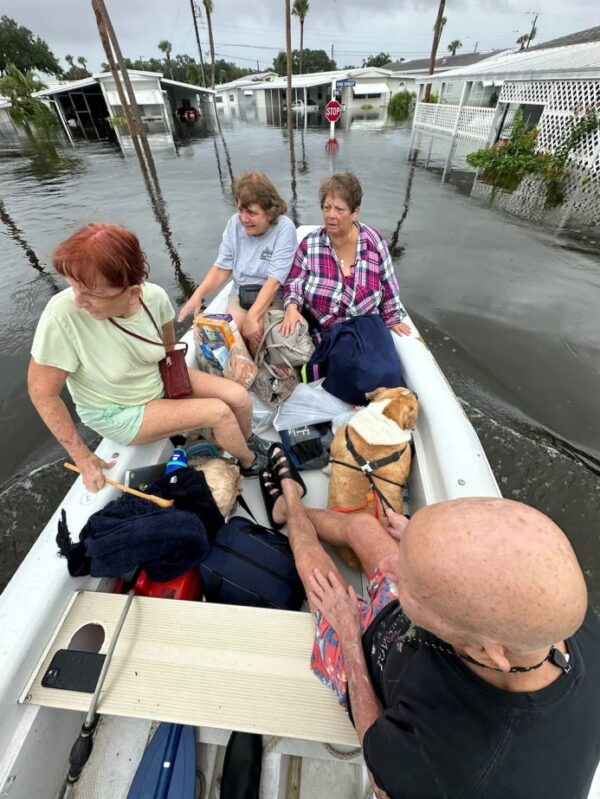
Residents and their dog evacuate by boat through a flooded Sarasota County neighborhood after Tropical Storm Debby inundated streets in August 2024. | Photo courtesy of Sarasota County
“That is in a historically flooded area, it’s a pretty decent floodplain,” Quartermaine said.
He explained in a memo the $6.1 million project would create “additional floodplain storage capacity” on the site to reduce flood risk within a half-mile radius. The 4.7-acre property is located at 5542 Bahia Vista Street — just in between Honore Ave and Cattleman Road.
The project depends on the county’s ability to acquire nearby residential properties. The stormwater department has already reached out to one homeowner, who they said showed interest.
“If the acquisitions don’t work, then I’m not sure that the project moves forward,” Quartermaine said.
In that case, the unspent funds would go towards another stormwater project.
Improving waterflow at Celery Fields
The new county administration building looks out upon the green slopes of the Celery Fields Regional Stormwater Facility. Pictures of colorful birds dot the hallways leading from the entrance to the first-story conference room.
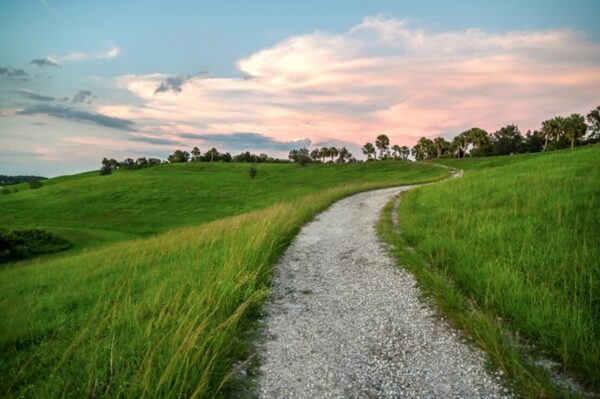
Sarasota County is planning waterflow improvements at Celery Fields. | Photo provided by Sarasota County.
Celery Fields has for decades been the area’s largest and most reliable flooding drainage area. With its wide lakes and thick Florida shrubbery, it also doubles as a park and wildlife habitat.
The plan would be to excavate areas of the Celery Fields’ central cell to allow for more waterflow, similar to the dredging of Phillippi Creek.
Stormwater officials met about six months ago with the Sarasota Audubon society, which oversees the Celery Fields for the county, to discuss the project.
Sara Reisinger, the society’s president, said she felt the county was taking appropriate steps to prevent damage to any critical wildlife habitats. Officials promised not to touch an island that is a key rookery for herons and other species.
“At the end of the day, it might actually end up being a very positive thing,” Reisinger said. “It creates more stormwater capacity and makes the area more usable for recreational and birding purposes.”
Suncoast Searchlight reporter Derek Gilliam contributed to this story.
Christian Casale is a local government/politics reporter for Suncoast Searchlight. Email him at christian@suncoastsearchlight.org.