
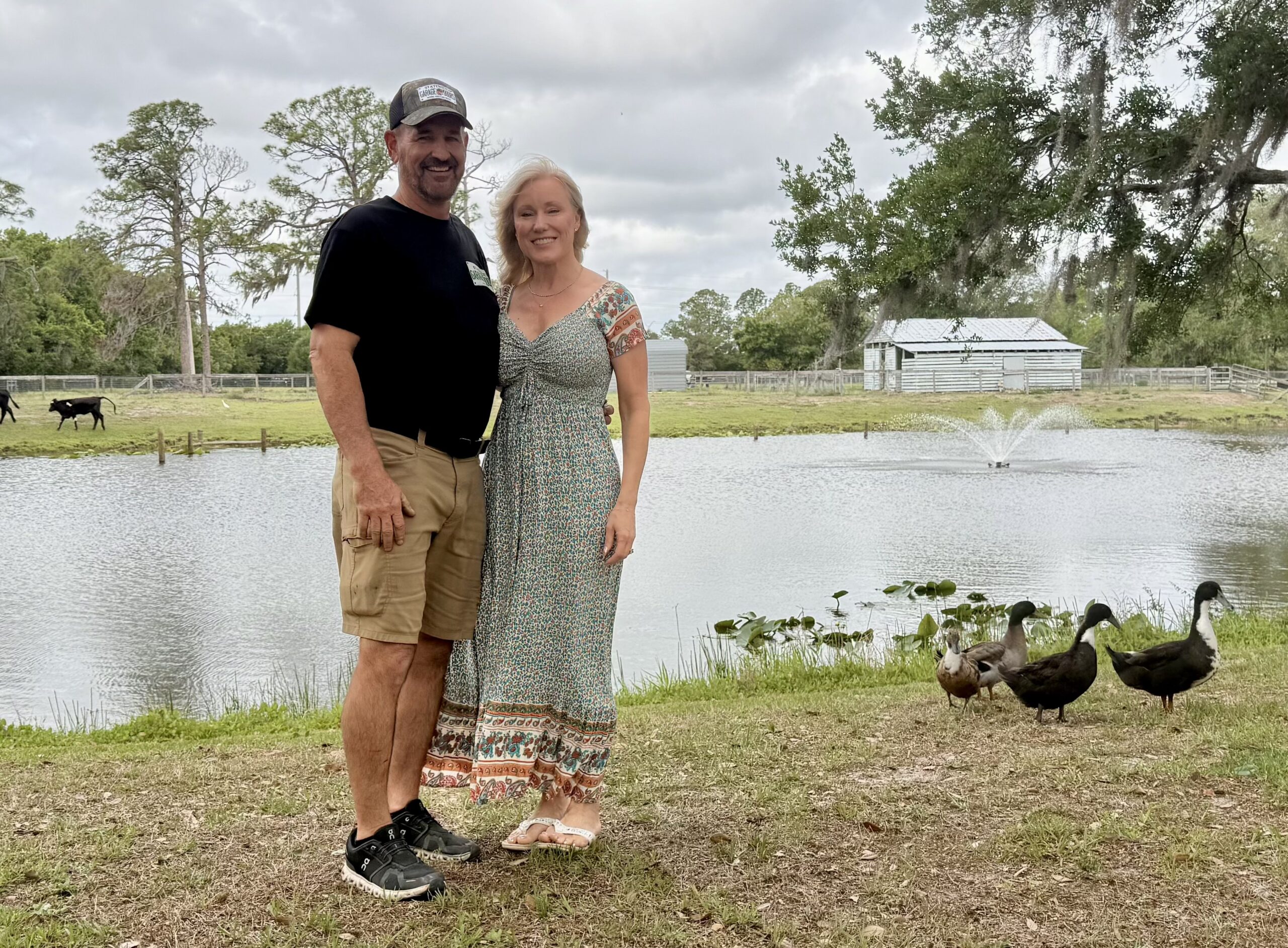
Lisa and Denver Miller oppose a proposed 65-foot-tall apartment complex with more than 500 units next to their 15-acre farm in rural east Sarasota County, saying it would upend the character of their neighborhood. | Photo by Derek Gilliam, Suncoast Searchlight
Sarasota County blocks ‘Live Local’ law, risking clash with developers
In a unanimous vote that could set up a major legal showdown, Sarasota County commissioners this week moved to block developers from building large apartment complexes next to rural homes and farmland, rejecting applications amid legal uncertainty over a controversial state law.
At the center of the dispute is Florida’s Live Local Act, a 2023 state law that lets developers bypass local zoning rules and public hearings if they include some affordable housing in their plans. In recent months, developers have used the law to propose projects with hundreds, and even thousands, of units in rural and low-density residential districts.
Commissioners said they were reacting to a steady barrage of concerns from residents over the impact of the proposed developments. Among them are Lisa and Denver Miller, who told Suncoast Searchlight they’ve been writing letters to the county about a planned apartment complex near their 15-acre farm in rural east Sarasota County that they believe would upend the character of their neighborhood.
“They can’t see the ramifications of what they’re allowing to happen,” Lisa Miller told Suncoast Searchlight. “The local level knows the town. They know the area. They know what their town needs. And Tallahassee is not looking at that.”
Commissioners echoed those concerns during their meeting Tuesday, where they directed staff to deny Live Local projects in rural and low-density residential areas — despite a warning from the county attorney that the decision could be difficult to defend in court.
“Residents have lost their seat at the table on development decisions that directly affect their neighborhoods,” Commissioner Joe Neunder told reporters after the meeting. Neunder wanted the county attorney to seek judicial review now instead of waiting for developers to sue — a move some warned was likely.
“Today’s decision is long overdue,” Neunder said.
Designed to spur affordable housing in a state where rising costs and local opposition have long made it difficult to build, the Live Local Act shifts key development decisions away from local governments. Instead of going to public hearings where neighbors could voice input, projects pitched under the Live Local Act go straight to city or county staff to review behind closed doors. Even elected officials are sidelined from the process.
As long as the project meets the law’s requirements, it must be approved.
To qualify, developers must set aside 40% of units for middle-income households — those earning less than 120% of the area median income, which was $129,120 for a family of four in Sarasota County last year.
In exchange, the law allows apartment projects in areas not typically zoned for housing, like commercial or industrial areas, and limits how much local officials can restrict their size — including height and density.
In the Sarasota-Bradenton metro area, the region faces a projected shortage of more than 2,800 units in that income bracket, according to a report last year from the University of Florida’s Shinberg Center for Housing Studies.
But critics said Live Local is just the latest in a series of tactics in Tallahassee to erode home rule, pointing to its ability to override local control of land use decisions. At least four local governments are fighting back through the courts.
The need also has cooled. The real estate analytics company CoStar reported Sarasota County had its highest recorded apartment vacancy rate in almost three decades in January.
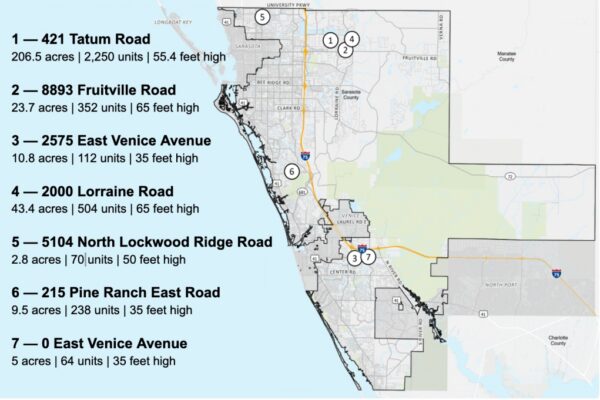
Sarasota County has received seven Live Local applications since September. They range from a 100-unit apartment complex near Venice to a 2,280-unit multifamily development on Tatum Ridge Road. | Suncoast Searchlight illustration using a Sarasota County map
Sarasota County has received seven Live Local applications — all since September. They range from a 100-unit apartment complex near Venice to a 2,280-unit multifamily development on Tatum Ridge Road. This week’s decision halts all but one of them — a 70-unit project on Lockwood Ridge Road that’s in a commercial zoning district.
The county’s decision has no impact on Live Local projects submitted within its municipalities, like Sarasota Station.
County Attorney Josh Moye argued in a memo last week that if developers challenge the exclusion of rural zoning categories, defending the decision “would be an uphill battle given the strict language of the Live Local Act.” Moye did not return calls seeking further comment.
Moye’s legal interpretation drew criticism from Commissioner Tom Knight.
“It’s disappointing that our county attorney didn’t reach the same conclusion on the application of this law that the county commissioners did, and we basically had to override his interpretation,” Knight said in a statement provided to reporters. “However, I’m glad the commissioners agreed with me on this issue, and we achieved this outcome.”
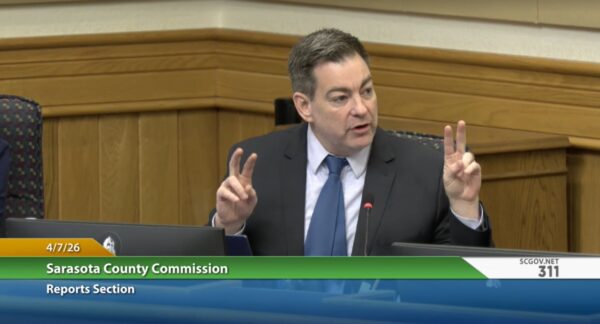
County Attorney Josh Moye, pictured here during the April 7 Commission meeting, argued in a memo that if developers challenge the exclusion of rural zoning categories, defending the decision “would be an uphill battle given the strict language of the Live Local Act.” | Screen grab from the Sarasota County Commission meeting livestream
An evolving view of Live Local policies
When the Live Local Act passed three years ago, Sarasota County interpreted it narrowly, deeming it eligible in traditional zoning categories — commercial, industrial and mixed-use — and excluding it from rural and low-density residential areas.
That approach began to unravel after the Legislature amended the law last year, expanding eligibility to include any parcel zoned to allow commercial uses by right even if categorized as rural residential.
Developers quickly seized on the change.
In Sarasota County, local land use attorney Bill Merrill has been behind most of the projects that tested those limits, representing five of the seven proposals.
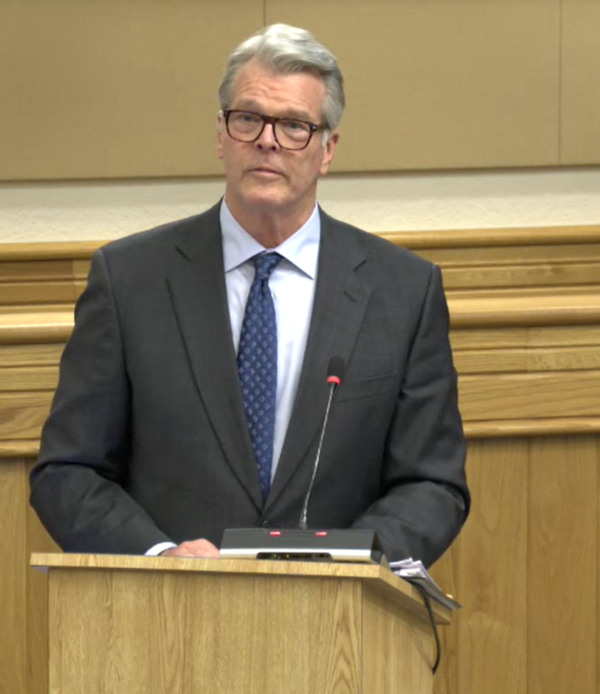
Sarasota land use attorney Bill Merrill, pictured here in a January County Commission meeting, has been behind most of the Live Local projects submitted in Sarasota County. | Screen grab from the Sarasota County Commission meeting livestream
Emails obtained by the Florida Trident through public records requests show county staff as receptive to the interpretation that Merrill put forward — one that could allow large apartment projects in areas typically not intended for that type of development, like rural residential and open-use estate zones.
Such zones ordinarily allow for limited commercial activity, such as animal boarding, veterinarian clinics and plant nurseries.
Merrill and other lawyers at the Sarasota-based law firm Icard Merrill argued that because those districts do allow some commercial uses, the multifamily projects qualified.
In multiple pre-application meetings and subsequent communications, staff indicated that Merrill’s projects met the Live Local criteria for zoning, density and height and allowed them to advance through the administrative review pipeline, the emails show.
Merrill did not respond to calls from reporters seeking comment for this story.
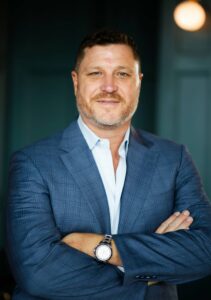
Former state senator Jeff Brandes founded the Florida Policy Project after leaving office. | Photo courtesy of the Florida Policy Project
Former state senator Jeff Brandes, who has been tracking housing issues since founding the Florida Policy Project after leaving office in 2022, said the Live Local Act was designed to open up land for more housing — not to “protect the farm next door.”
“If I’m boarding dogs, that’s a commercial use,” Brandes said, in agreement with Merrill’s interpretation.
Live Local, he said, is a “limited tool” to help cut through the ambiguous regulatory framework created by local governments that undermine affordable housing developments. But he added that the law doesn’t fully address the problem.
“There is no larger vision for what Florida’s housing policy should look like long-term,” Brandes said. “There’s no silver bullet in housing. There are a variety of lead bullets, and you have to fire them all.”
Local governments across Tampa Bay push back
Even as it aims to address Florida’s affordable housing shortage, the Live Local Act has faced resistance from local governments decrying what they have described as the state’s preemption of local control.
Many moved quickly to limit the law’s reach.
Within months of its 2023 passage, the Miami-area city of Doral adopted a six-month building moratorium, giving it a temporary reprieve from its potential impacts there. Other local governments, like Pinellas and Pasco, opted out of the tax breaks tied to the bill, refusing to offer developers the incentives meant to spur those projects.
As cities and counties sought ways to limit or work around the law, the Legislature worked to strengthen it, updating the statute each session to close perceived loopholes — banning moratoriums, expanding the zoning districts where it applies and allowing prevailing parties in Live Local lawsuits to recover attorney’s fees.
The strongest pushback has come from the Tampa Bay region, where Hillsborough County sued the state in March, calling the Live Local Act unconstitutional.
“I have had enough of these greedy multifamily developers raping our land and destroying our communities, all while forcing us to subsidize them through this horrendous law,” Hillsborough County Commissioner Joshua Wostal wrote on social media around the time of the suit’s filing.
Developers also have sued local governments for denying their Live Local projects. In one case, a developer sued Plant City in 2023 after officials rejected an application to build more than 1,500 apartments and 450 townhomes on what had previously been a golf course community.
In another, developers of a 17-story project sued the city of Hollywood after the project was not processed through Live Local. That development sought to nearly triple the city’s height limits.
In both cases, local judges sided with the municipalities, though developers have appealed the judge’s final order in the Plant City case and have filed post-judgement motions in the Hollywood case, indicating a possible appeal.
Sarasota County Commissioner Ron Cutsinger acknowledged the issue could end up in court.
“We need to be very aware of the fact that our attorney has indicated he believes it’s a difficult argument and that we may be on the hook for the fees associated with that,” he said during the meeting. “I think we need to have eyes wide open.”
Massive projects proposed near Sarasota farmlands
For the Millers, the fight is unfolding just beyond their fence.
Towering oak trees cast shade over their 15-acre property off Loraine Road, where ducks drift across a small pond past grazing cows and horses — a quiet stretch of land they thought would remain unchanged.
The Millers moved there two years ago for the country lifestyle. It’s no secret that development in Sarasota has marched east in recent years, but the couple researched the neighboring properties and thought they were protected.
Land next door to them was zoned for open use estate, allowing at most one house for every five acres.
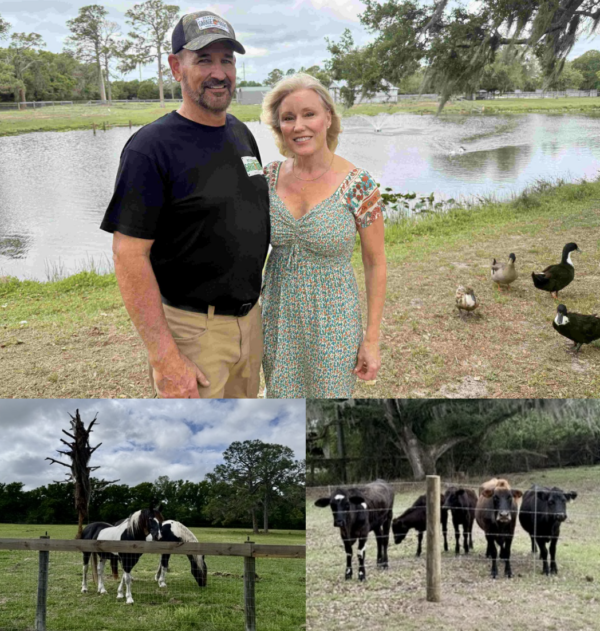
Towering oak trees cast shade over the Miller’s 15-acre property off Loraine Road, where ducks drift across a small pond past grazing cows and horses — a quiet stretch of land they thought would remain unchanged. | Photos by Derek Gilliam, Suncoast Searchlight
But earlier this year, a developer proposed a 65-foot-tall apartment tower with more than 500 units next door, on 43 acres. The Millers didn’t hear about it from the county. They learned of the plan from a neighbor.
Miller said she began looking into the Live Local Act, even reading House Bill 1389, which amended the law to exclude farm operations from the definition of commercial activity. But since it hasn’t yet been signed by Gov. Ron DeSantis, she was unsure if it applied.
“Live Local sort of bypasses the county’s decision,” Lisa Miller said, “and forces them to put developments where they wouldn’t normally go.”
When she learned about the commissioners’ decision this week to block projects like the one next to her farm, Miller said she was relieved — but cautious.
“I don’t think our fight is over,” she said.
This story is a collaboration between the Florida Trident, a nonprofit newsroom of the Florida Center for Government Accountability, and Suncoast Searchlight, a nonprofit newsroom of the Community News Collaborative. Learn more at suncoastsearchlight.org or floridatrident.org.